In Kürze
Worum geht es in dem Podcast?
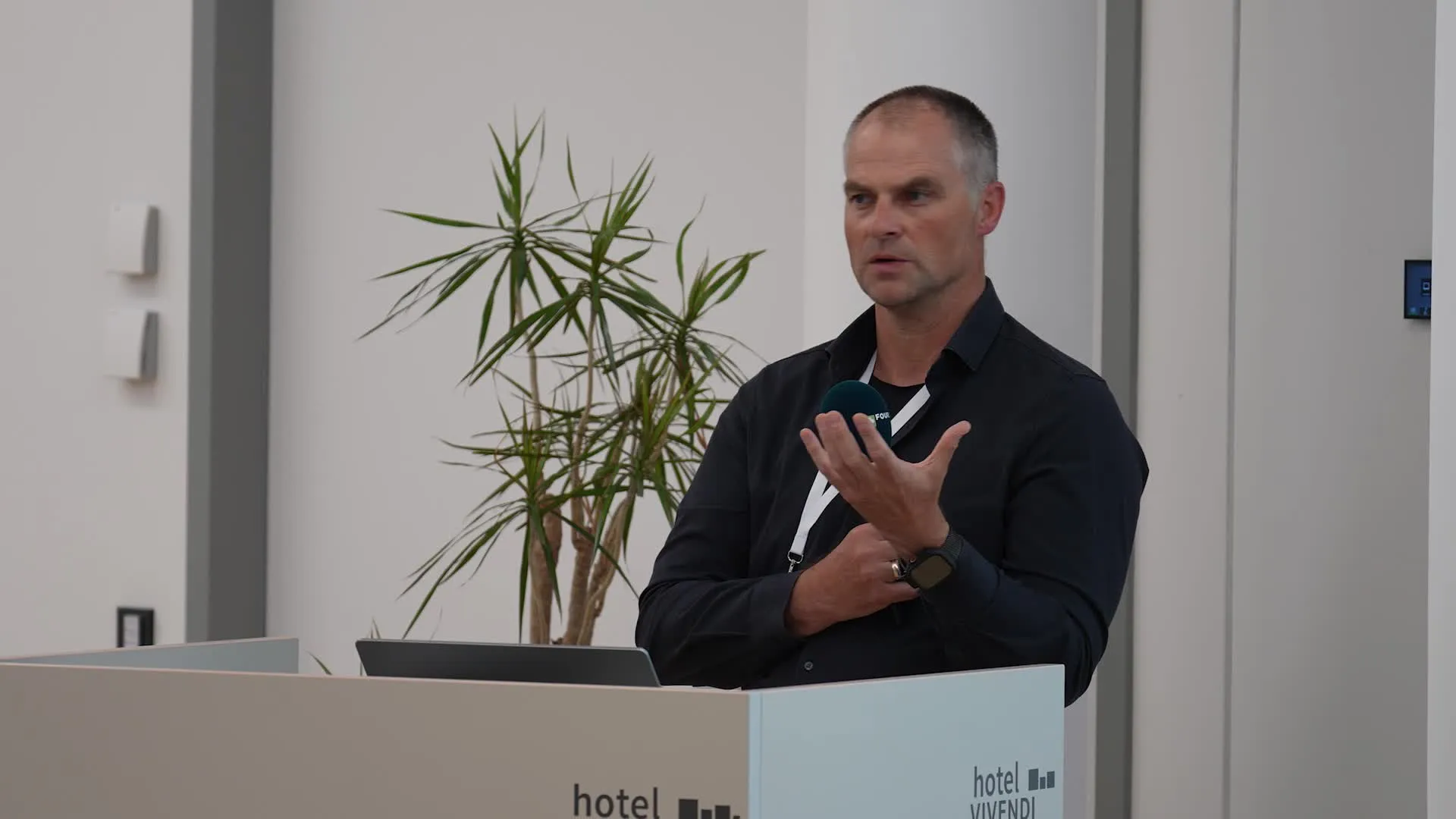
Dr. med. Matthias Giesel, a specialist in anesthesiology and pain therapy at the Christliches Klinikum Soest, reclassifies fibromyalgia from a pain-medicine perspective in his trailer for the Circle of Experts 2026. His core thesis: fibromyalgia is more than a diffuse whole-body pain — it is a multidimensional resilience disorder with somatic, neuropathic and psychosomatic components that demands its own diagnostic and therapeutic logic.
Giesel does away with the old dogma of the diagnosis of exclusion: fibromyalgia may and must today also be named when rheumatic diseases, herniated discs or the consequences of protracted viral infections — including post-COVID courses — are present in parallel. Functional MRI studies show that in those affected, a pain stimulus activates wide areas of the brain, because over time a pronounced pain memory with numerous synaptic connections develops. This neuroplasticity explains the high level of suffering, which is often hard for treating professionals to comprehend. Würzburg research adds to the picture an intraepidermally detectable small-fiber neuropathy, which in individual cases brings various neuropathic therapy approaches into discussion (details in the full talk).
At the center is the therapeutic reclassification: while the old AWMF guideline of 2017 did not reflect cannabis, the DGS practice guideline published the previous year addresses current developments in pain-medicine guidelines (content for healthcare professionals). Giesel's talk at the 2026 congress explores in depth how cannabinoids fit into a multimodal concept that addresses the psychosomatic amplification and the phenomenon of the social withdrawal spiral — the 'flatten-the-curve' reaction of many patients.
Drei Formate an einem Tag - der Circle of Experts
Fachvorträge
Klinische Praxis aus Schmerz- und Palliativmedizin, Neurologie, Pharmakologie, Pflege und Apotheke. Kurze Slots, hoher Praxisbezug, Q&A direkt im Anschluss.

Fachdiskussionen
Moderierter Austausch zwischen Klinik, Praxis, Apotheke und Pflege. Themen werden vorab gesammelt und gemeinsam priorisiert.

Netzwerken
Klinik, Praxis, Apotheke und Pflege kommen in kleinen Tischrunden gezielt miteinander ins Gespräch, vertiefen Kontakte aus dem Tagesprogramm und knüpfen neue Verbindungen.
Die Fachexpert:innen
Klinik, Forschung, Apotheke und Pflege — die Sprecher:innen kommen aus den Bereichen, in denen Medizinalcannabis täglich angewendet wird.
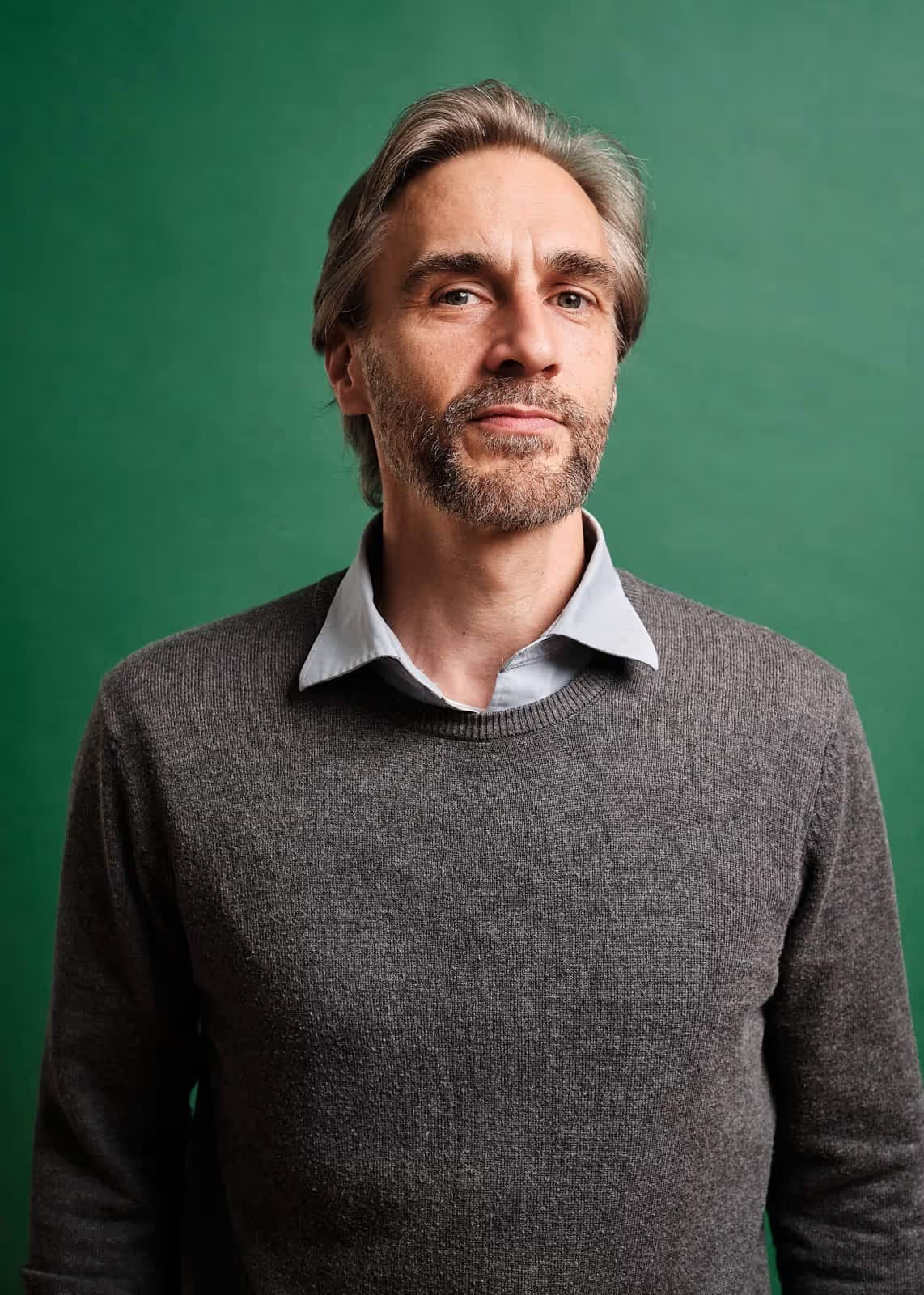
Prof. Dr. mult. Eckhard Nagel
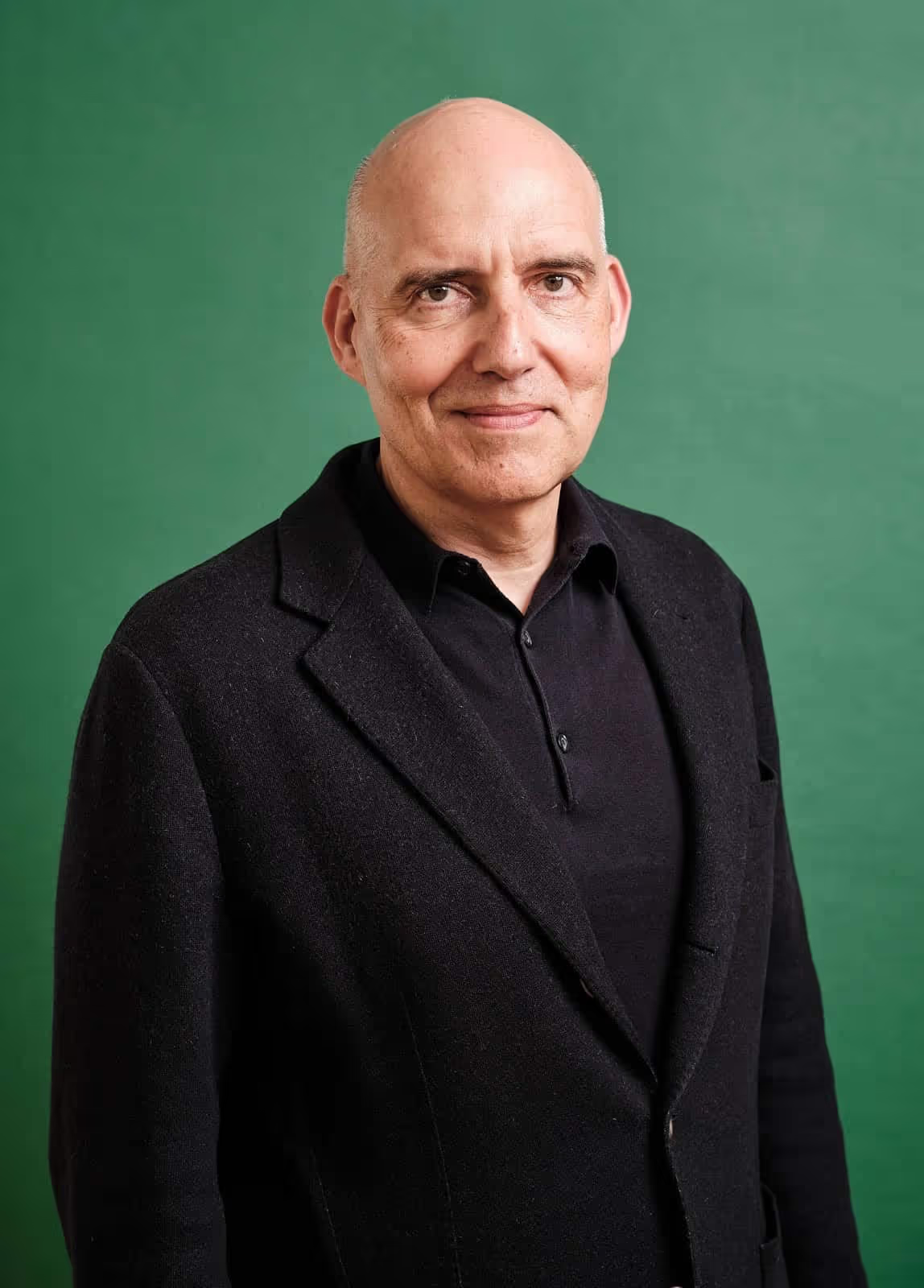
Prof. Dr. mult. Eckhard Nagel is Managing Director of the Institute of Medical Management and Health Sciences at the University of Bayreuth. At the Circle of Experts, he examines the ethical aspects of medical cannabis therapy and advocates for real-world studies.

Prof. Dr. med. Thomas Herdegen
Prof. Dr. med. Thomas Herdegen is a specialist in pharmacology and toxicology and was for many years deputy head of the Institute of Experimental and Clinical Pharmacology at UKSH Kiel. He is co-author of the Cannabis practice guideline and recipient of the German Pain Award 2024.

Dr. med. Dipl.-Chem. Konrad F. Cimander
Dr. med. Dipl.-Chem. Konrad F. Cimander is a specialist in general and addiction medicine, heads the K.C.M. Hannover Competence Center for cannabis medicine and is President of the German Medical Cannabis Society (DMCG). He is a lecturer on addiction medicine, psychopharmacology and cannabis medicine.


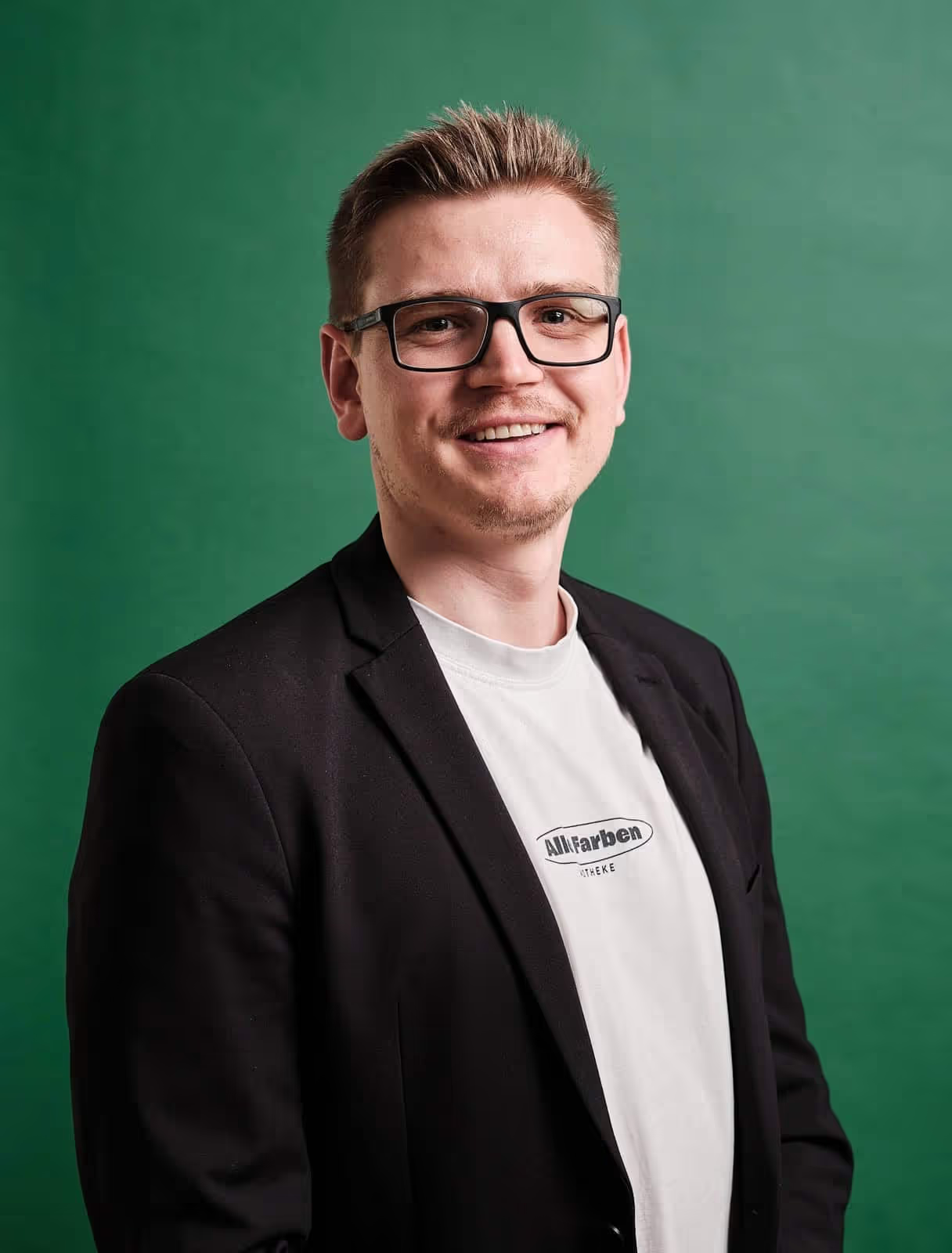
Dr. med. Matthias Giesel
Dr. Matthias Giesel is a specialist in anesthesiology and heads the pain clinic at Marienkrankenhaus Soest as well as the practice for pain therapy and palliative medicine at the Hospitalverbund MVZ Soest. He works as a consultant to the pharmaceutical industry on medicinal cannabis.
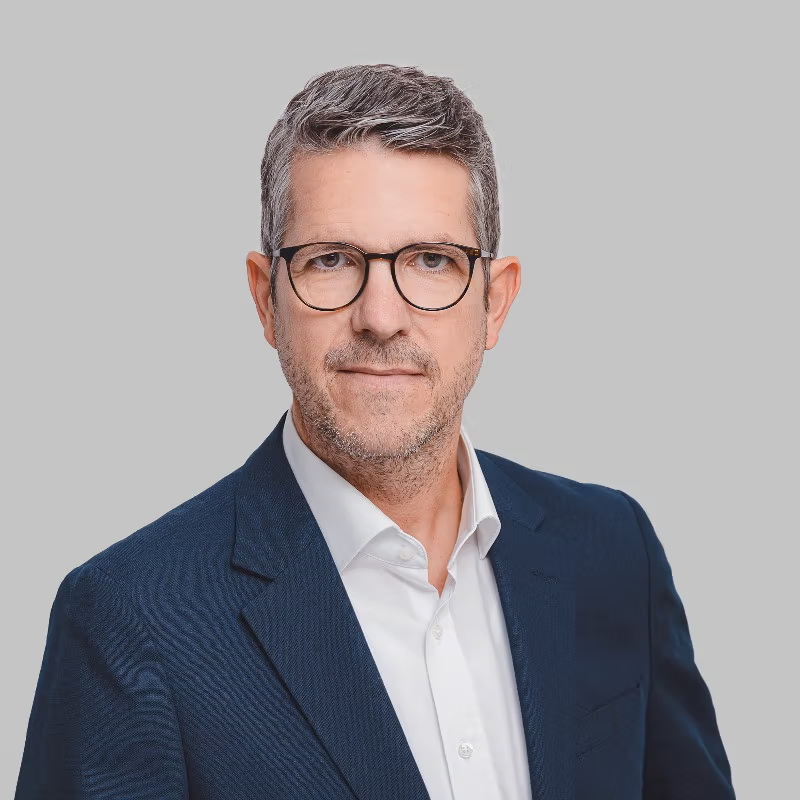
Sascha Saßen
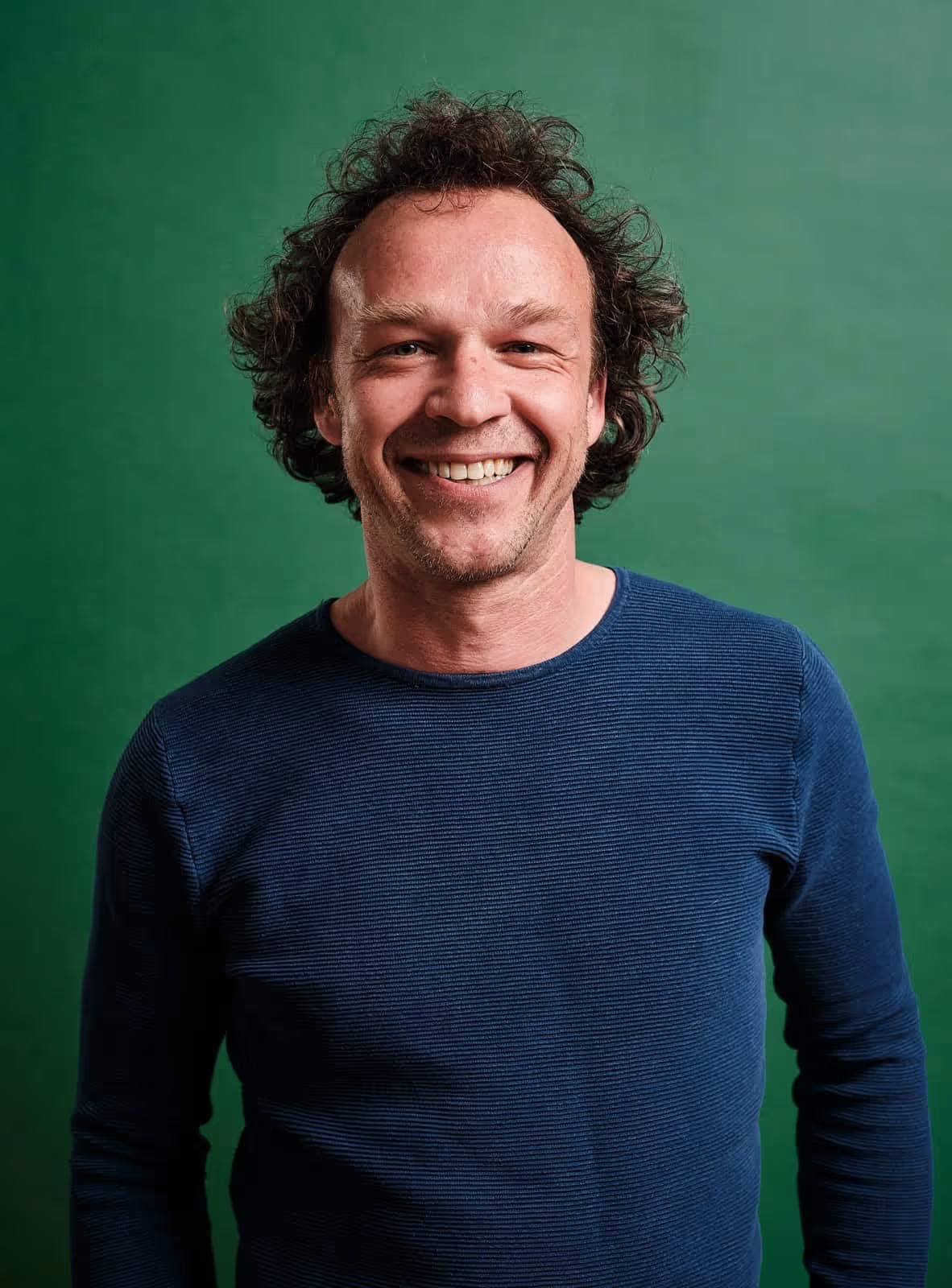
Sascha Saßen holds a degree in nursing management (Diplom-Pflegewirt), is a certified pain expert (CEKIP) and has been CEO of the hesena Group since April 2025. At the Circle of Experts he spoke on pain management in inpatient long-term care and on the medication process in nursing and palliative care.
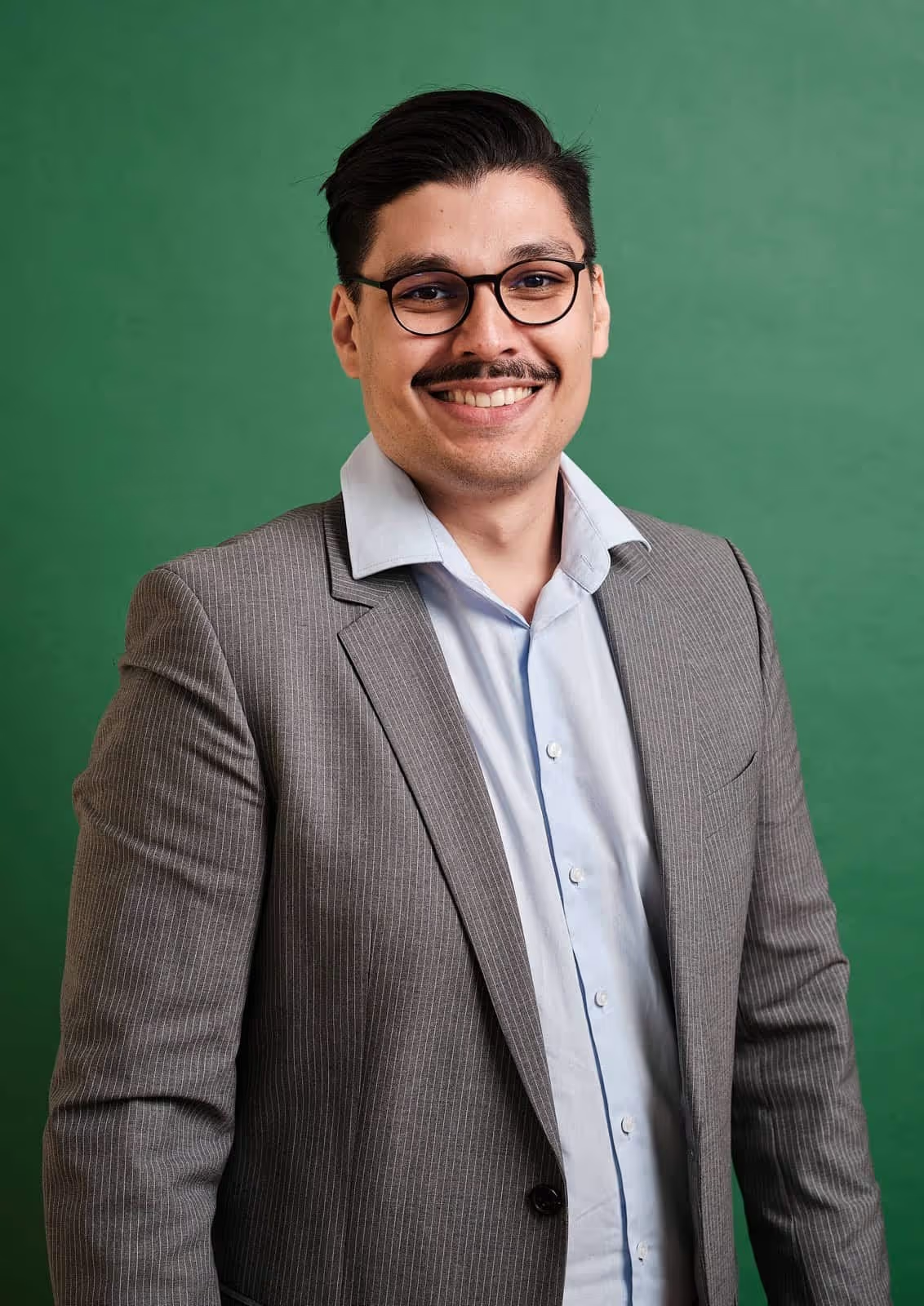
André Ihlenfeld
Dr. André Ihlenfeld is a specialist in anesthesiology and a pain physician, as well as Medical Director at Copeia, where he is responsible for projects on patient-reported data collection under cannabis therapy (including the Physicians Experience Platform). He is co-author of publications on cannabis-based medicines.
Weitere Informationen
- [00:00] — Fibromyalgia is whole-body pain with sleep disturbance, exhaustion and psychiatric comorbidity
- [00:32] — Reclassification: fibromyalgia is no longer a diagnosis of exclusion
- [01:18] — Functional MRI shows: pain memory and synaptic connections explain the suffering
- [01:46] — Würzburg's detection of small-fiber neuropathy opens up neuropathic therapy options
- [02:37] — Resilience disorder: nine out of ten patients have a psychosomatic component
- [03:08] — Current developments in fibromyalgia guidelines (healthcare professionals)
Was ist Fibromyalgie? Es ist der klassische Ganzkörperschmerz, der aber eben auch mit Schlafstörungen und Erschöpfungsneigung einhergeht. Die Patienten beschreiben häufig, dass sie ihr Tagwerk nicht mehr richtig auf die Kette kriegen — sei es, dass sie noch arbeiten gehen, sich zurückziehen und nicht können, oder dass zu Hause das soziale Umfeld nicht mehr funktioniert. Und sie haben häufig psychiatrische Komorbiditäten mit depressiven Störungen oder Angststörungen, welche eine Rolle spielen.
Wenn wir Patienten haben, die diese Symptomatik beschreiben, müssen wir natürlich grundlegend ein paar Diagnosen ausschließen. Da sind viele aus dem rheumatologischen Formenkreis — also Rheumatoide Arthritis, Polymyalgia rheumatica, Polymyositis. Aber auch verschleppte Virusinfekte, grippale Infekte und Corona-Infektionen können eine Rolle spielen. Das ist neu. Früher galt die Fibromyalgie als Ausschlussdiagnose. Das heißt: Habe ich irgendeine rheumatische Erkrankung? Habe ich einen Bandscheibenvorfall? Habe ich irgendetwas, was ähnlich sein kann? Dann dürfe oder solle Fibromyalgie nicht mehr genannt werden. Das stimmt so nicht. Wir können Fibromyalgie zusätzlich zu anderen somatischen Erkrankungen haben.
Wenn wir ins MRT gehen und ich mich quasi mit einer Nadel in den Finger steche und ein funktionelles MRT mache, in dem ich im Kopf gucke, welche Areale durch diesen Schmerzreiz erregt werden, dann ist es bei mir — plupp — leuchtet so ein kleiner Punkt auf. Beim Fibromyalgiker leuchtet die halbe Hemisphäre auf. Im Endeffekt erklärt man damit auch, dass der Schmerz gelernt wird, dass das Schmerzgedächtnis gebildet wird — bildlich gesprochen. Es bilden sich ganz viele synaptische Verschaltungen bei Fibromyalgikern, und deswegen werden die vermeintlich wenigen Befunde, die wir finden, häufig überexprimiert. Die Patienten berichten von einem unfassbaren Leidensdruck, den wir als Therapeuten nicht so richtig nachvollziehen können.
Man konnte in Würzburg an der Uni nachweisen, dass es bei Fibromyalgikern häufig zu einer Small-Fiber-Neuropathie kommt. Das heißt, wir konnten intraepidermal sehen, dass die Nervenfasern zugrunde gehen. Und das ist auch die Indikation, bei der ich sage: Die neuropathische Komponente, also eine Pregabalin-Medikation, eventuell sogar mal eine SCS — Spinal Cord Stimulation — könnte überhaupt eine Rolle spielen. Das kommt aber nicht bei jedem Patienten vor. Neun von zehn Patienten haben eine psychologische Baustelle, eine psychosomatische Verstärkung, irgendeine Problematik, die da eine Rolle spielt. Ich glaube, dass es sich um eine Resilienzstörung handelt. Das Erste, was der Fibromyalgiker macht, ist Flatten the Curve — kennt man von Corona. Er zieht sich aus allem heraus, was zusätzlichen Stress macht. Er zieht sich zurück: Die Ehe wird schwierig, keine Konfrontation mehr. Häufig geht der Arbeitsplatz, weil er sich aus dem Arbeitsplatz zurückzieht. Aber man sieht, dass der Effekt dieses Flatten the Curve relativ gering ist.
Bis vor kurzem hatten wir nur die AWMF-Leitlinie. In der AWMF-Leitlinie steht Cannabis gar nicht drin, sagen wir es mal so — sie ist von 2017. Aber es gibt jetzt ganz neu aus dem letzten Jahr die DGS-Praxisleitlinie, also quasi für Fibromyalgie, in der Cannabis deutlich im Stellenwert drinsteht und in der wir Cannabis bei Fibromyalgien einsetzen können.