In Kürze
Worum geht es in dem Podcast?
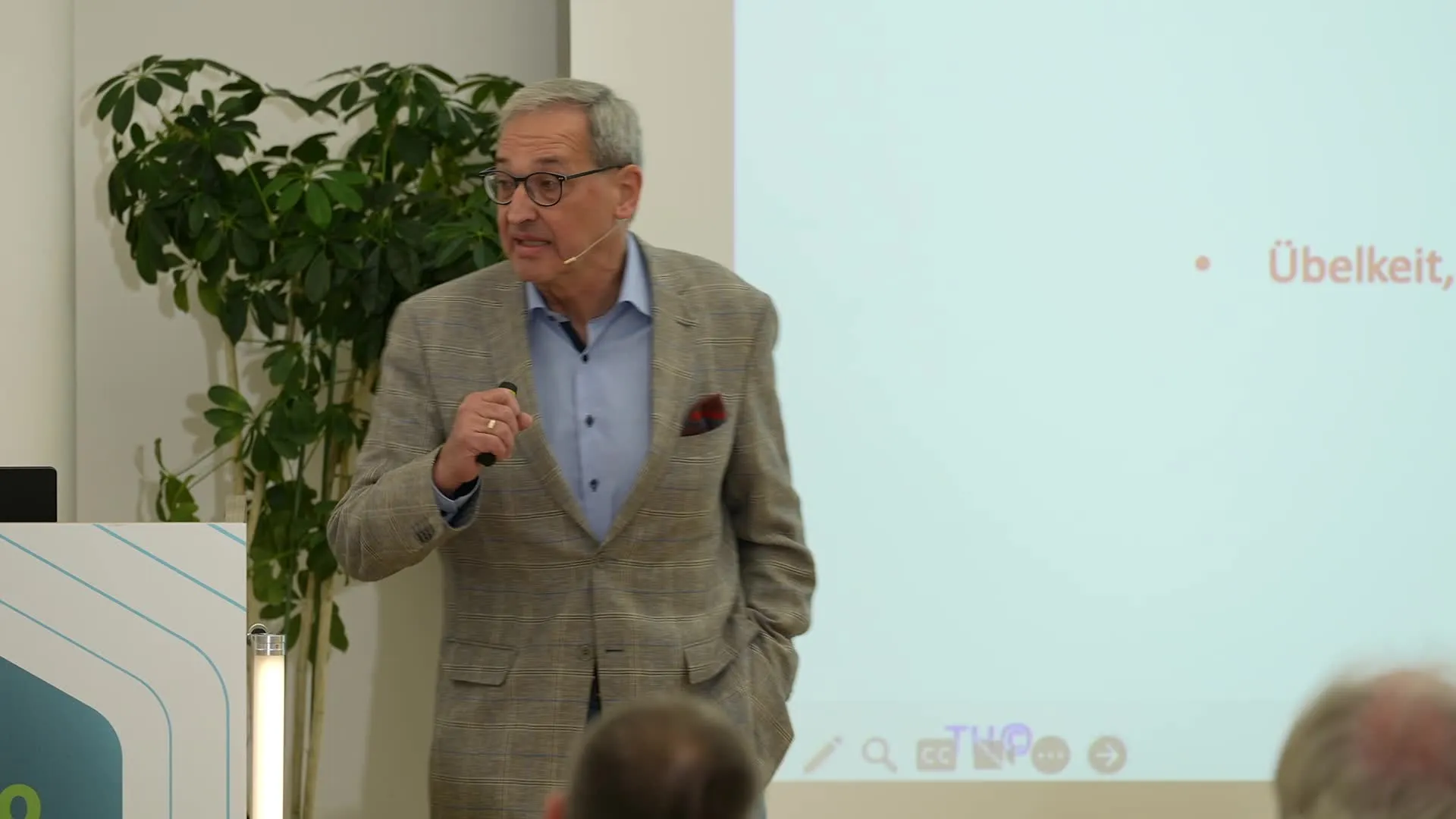
Prof. Dr. med. Thomas Herdegen, a specialist in pharmacology and toxicology and deputy head of the Institute of Experimental and Clinical Pharmacology, opens his trailer for the Circle of Experts 2026 with a pharmacologically grounded view of the clinical significance of medical cannabis. His core thesis: cannabinoids do not act in isolation on the pain axis but simultaneously modulate the limbic system, affect regulation and the stress axis — exactly those dimensions that have to be addressed pharmacologically in multimodal pain therapy anyway.
Herdegen derives the function of the endocannabinoid system from evolutionary biology: hunger activity, night vision and risk-taking are regulated via CB1 and CB2 receptors, among others in the nodose ganglion of the vagus nerve, in dynamic interplay with the satiety peptide cholecystokinin (CCK). From this he develops a clinical argument for switching from opioids to medical cannabis: while opioids cause a regeneration-relevant chemical castration with suppression of testosterone and estrogen, cannabis opens up a more favorable profile — provided the analgesia holds.
In practical terms, Herdegen specifies aspects of dosing and safety: THC orally as the therapeutically decisive agent, CBD in a ratio of one to one up to one to ten, plus the note on the critical threshold of 300 mg CBD, above which transaminases rise and CBD acts as a CYP3A4 inhibitor similar to verapamil. The outlook is the interlinking with psilocybin and the default mode network — a research perspective for palliation and psychiatric indications that the 2026 congress will explore in greater depth.
Drei Formate an einem Tag - der Circle of Experts
Fachvorträge
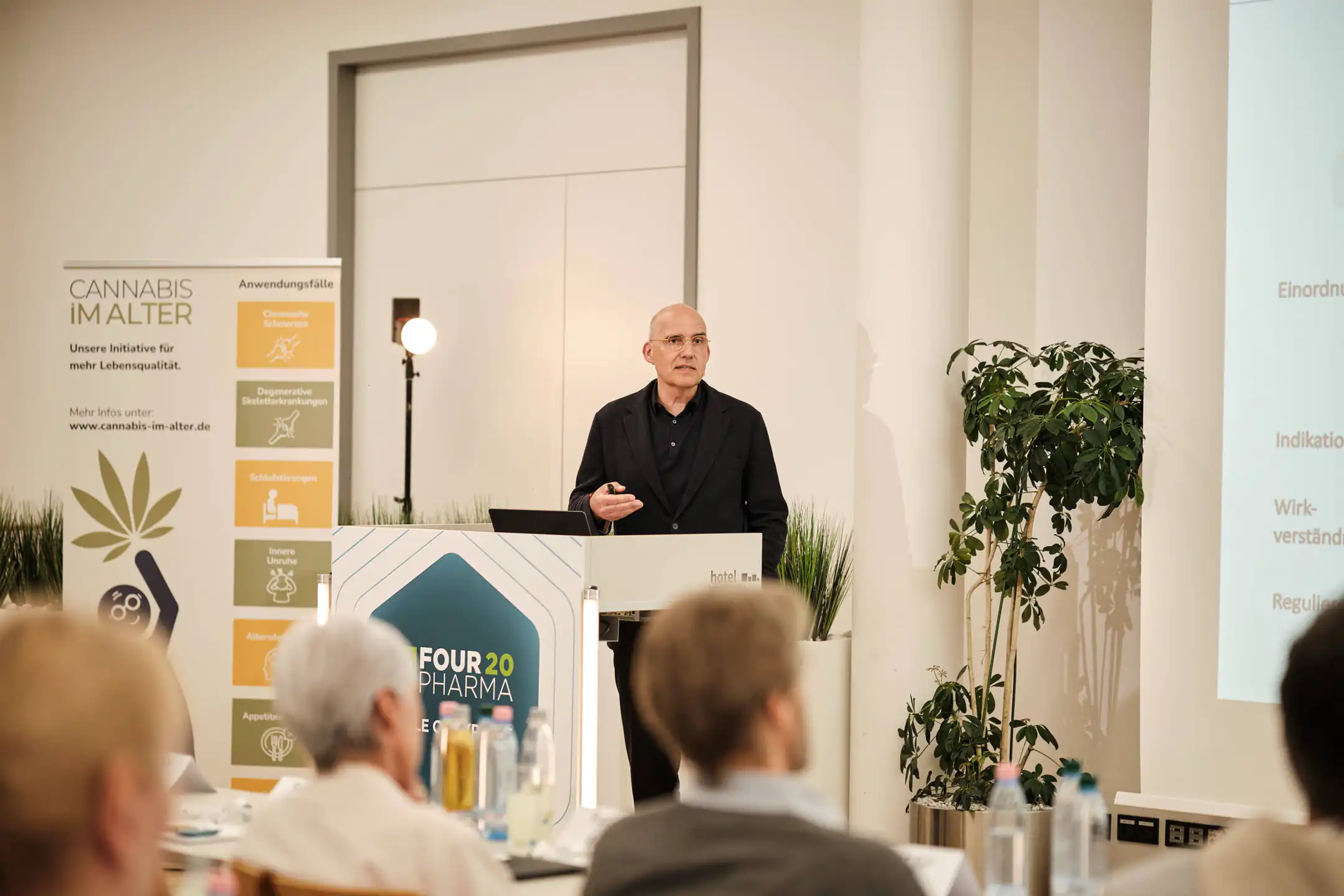
Klinische Praxis aus Schmerz- und Palliativmedizin, Neurologie, Pharmakologie, Pflege und Apotheke. Kurze Slots, hoher Praxisbezug, Q&A direkt im Anschluss.

Fachdiskussionen
Moderierter Austausch zwischen Klinik, Praxis, Apotheke und Pflege. Themen werden vorab gesammelt und gemeinsam priorisiert.

Netzwerken
Klinik, Praxis, Apotheke und Pflege kommen in kleinen Tischrunden gezielt miteinander ins Gespräch, vertiefen Kontakte aus dem Tagesprogramm und knüpfen neue Verbindungen.
Die Fachexpert:innen
Klinik, Forschung, Apotheke und Pflege — die Sprecher:innen kommen aus den Bereichen, in denen Medizinalcannabis täglich angewendet wird.
Prof. Dr. mult. Eckhard Nagel
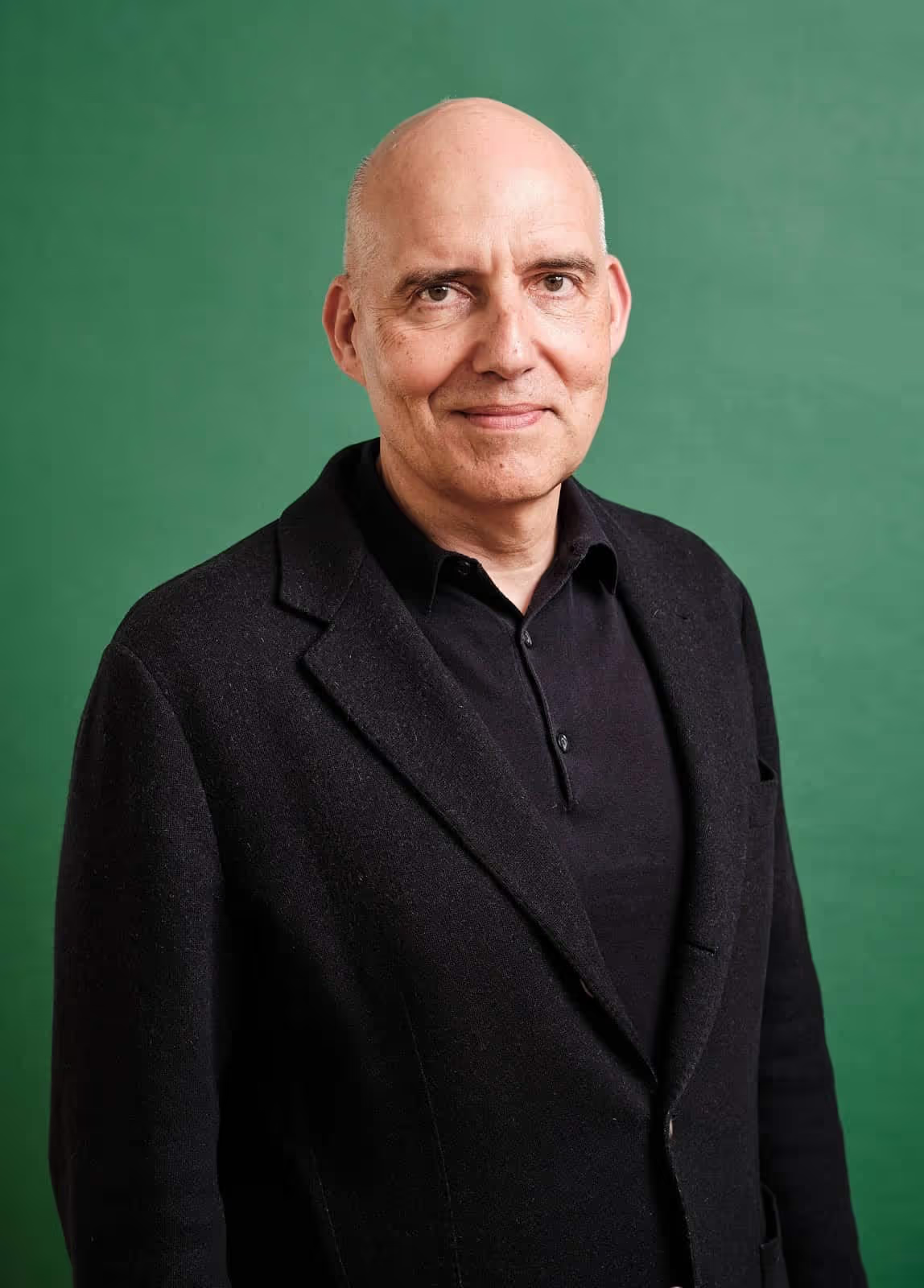
Prof. Dr. mult. Eckhard Nagel is Managing Director of the Institute of Medical Management and Health Sciences at the University of Bayreuth. At the Circle of Experts, he examines the ethical aspects of medical cannabis therapy and advocates for real-world studies.

Prof. Dr. med. Thomas Herdegen
Prof. Dr. med. Thomas Herdegen is a specialist in pharmacology and toxicology and was for many years deputy head of the Institute of Experimental and Clinical Pharmacology at UKSH Kiel. He is co-author of the Cannabis practice guideline and recipient of the German Pain Award 2024.

Dr. med. Dipl.-Chem. Konrad F. Cimander
Dr. med. Dipl.-Chem. Konrad F. Cimander is a specialist in general and addiction medicine, heads the K.C.M. Hannover Competence Center for cannabis medicine and is President of the German Medical Cannabis Society (DMCG). He is a lecturer on addiction medicine, psychopharmacology and cannabis medicine.


Dr. med. Matthias Giesel
Dr. Matthias Giesel is a specialist in anesthesiology and heads the pain clinic at Marienkrankenhaus Soest as well as the practice for pain therapy and palliative medicine at the Hospitalverbund MVZ Soest. He works as a consultant to the pharmaceutical industry on medicinal cannabis.
Sascha Saßen
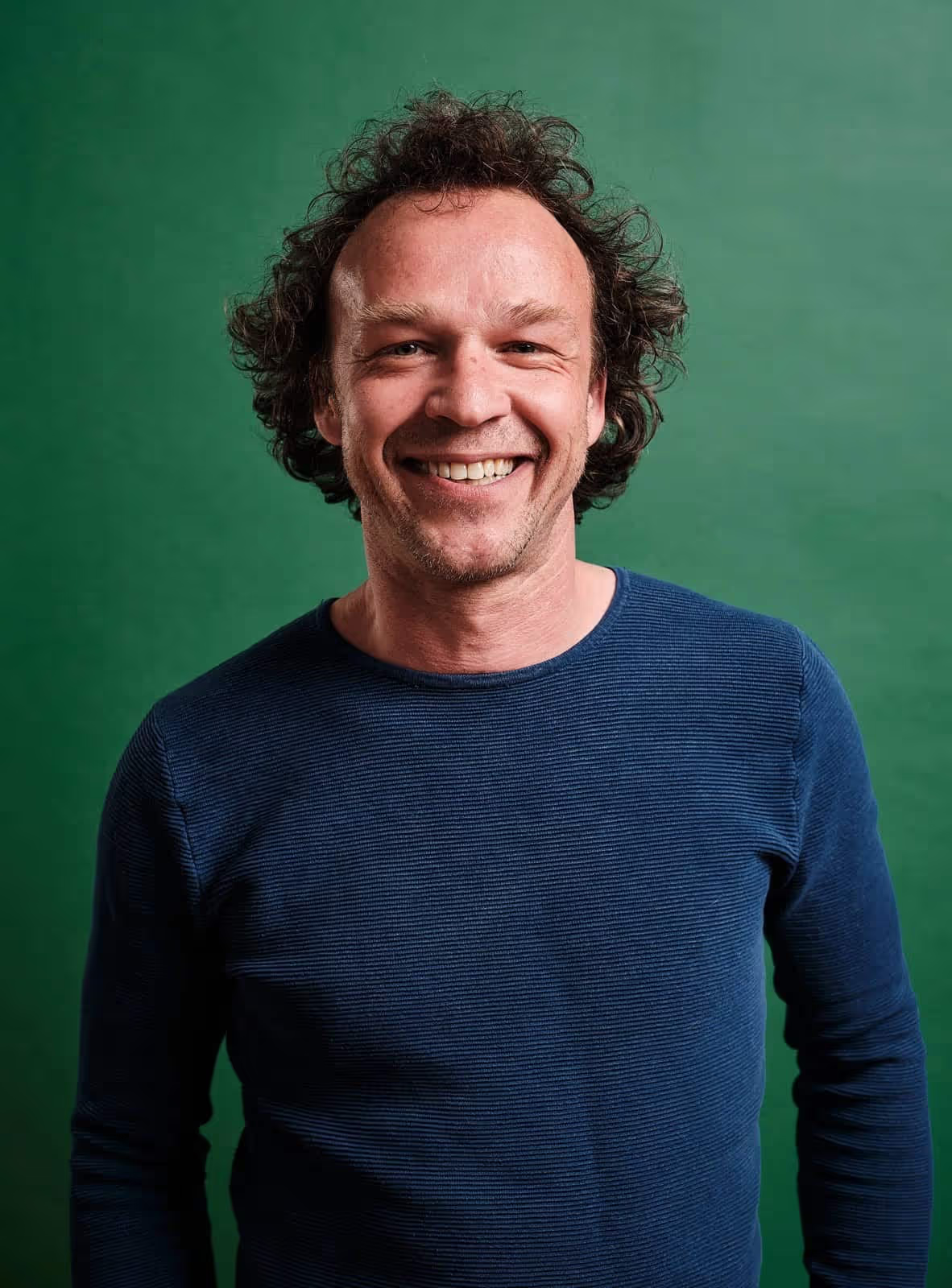
Sascha Saßen holds a degree in nursing management (Diplom-Pflegewirt), is a certified pain expert (CEKIP) and has been CEO of the hesena Group since April 2025. At the Circle of Experts he spoke on pain management in inpatient long-term care and on the medication process in nursing and palliative care.
André Ihlenfeld
Dr. André Ihlenfeld is a specialist in anesthesiology and a pain physician, as well as Medical Director at Copeia, where he is responsible for projects on patient-reported data collection under cannabis therapy (including the Physicians Experience Platform). He is co-author of publications on cannabis-based medicines.
Weitere Informationen
- [00:00] — Core point: medical cannabis works beyond the pain axis on well-being and affect
- [00:57] — The endocannabinoid system improves night vision via vagus receptors
- [01:55] — Opioids cause chemical castration: an argument for switching to medical cannabis
- [03:03] — CBD safety: from 300 mg, a rise in transaminases and CYP3A4 inhibition like verapamil
- [03:44] — Future perspective: combining psilocybin and medical cannabis in palliation and therapy
Das ist der Kernpunkt des Einsatzes von Medizinalcannabis: eine Wirkung nicht einfach nur auf die Schmerzachse, sondern jenseits davon — auf Befindlichkeit, auf das Angstsystem, das limbische System, auf Affekte und Panik, auf die Stressachse. Und das sind Dinge, die wir immer medikamentös in der multimodalen Therapie ansteuern. In diese Aktivität positionieren wir jetzt das Endocannabinoid-System.
Man ist irgendwo in einer Höhle, draußen wird man belagert, Wasser haben wir genug, aber das Essen geht aus und irgendwann treibt mich der Hunger zu sagen, ich muss was tun, weil sonst krepiere ich. Dann gehe ich nachts raus. Nachts sieht man schlecht, aber in der Dunkelheit ist das Einzige, was uns eine Sicherung gibt, dass wir nicht entdeckt werden. Das Endocannabinoid-System verbessert das Nachtsehen. Also: Wenn jemand nachtsichtige Probleme hat — keine Möhrchen essen, sondern ein bisschen THC nehmen. Wie lässt sich diese Hungeraktivität, die zur Nahrungssuche treibt, nachweisen? Das Ganglion nodosum des Vagus hier unten ist voller Cannabis-Rezeptoren, und zwar in einem Gegenspiel zum Cholecystokinin, zum CCK, das ist ein Neuropeptid. Das ist ein Sättigungspeptid: Wenn wir Hunger haben, haben wir viel CB1. Wenn wir gegessen haben, finden Sie keinen CB1. Hochdynamisch, hochaktiv — diese Hungeraktivität, die der CB1- und der CB2-Rezeptor allein in diesem kleinen Bereich entfaltet.
Wenn wir eine schwerere Verletzung haben, dann muss die ausheilen. Und da brauche ich zum Ausheilen, wenn mir mein Bein abgebissen wurde vom Säbelzahntiger, ein bisschen Euphorie — deshalb haben wir euphorische Inhalte durch das Opioidsystem. Die Schmerzen wollen wir hemmen. Aber wenn ich heile und regeneriere, brauche ich Ruhe. Ich darf keine Lust auf Sex haben. Deshalb machen die Opioide eine chemische Kastration. Dass wir Testosteron und Östrogen vielleicht substituieren müssen, ist etwas, was wir schon lange wissen, aber erst seit kurzem so bei den Schmerzkongressen verhandeln. Und das ist unter anderem einer der Punkte, wo es Sinn macht, wenn es die Analgesie verträgt, den Wechsel von Opioiden zu Medizinalcannabis. Das lässt sich hier aus der Physiologie und Pathophysiologie ableiten.
Was ist Medizinalcannabis, wenn wir uns darauf einigen? THC, therapeutisch entscheidender Wirkstoff, zumeist per os. Wir werden nachher sehen, dass man mit Extrakten dann inhalativ eine weitere Option hat, an der Frau Twente hier arbeitet. Zumeist CBD in einem Verhältnis zwischen eins zu eins und eins zu zehn. Da kann man spielen, je nachdem, was man sich noch vom CBD erwartet. Sicherheit: CBD ist ein Problem. Ab 300 Milligramm, ganz kurz, müssen Sie rechnen, dass bei 10 bis 15, 20 Prozent die Leberwerte hochgehen, die Transaminasen. Und ab 300 Milligramm wirkt CBD als CYP3A4-Hemmer, ähnlich wie Verapamil. Da muss man einfach drauf achten.
Aachten redet über Psilocybin. Das ist eine hochspannende Substanz. Und das Psilocybin arbeitet ja über dieses Default Mode Network, das uns in die Depression, aber auch in Angst und Sorge bringt. Wir wissen, dass Cannabis da möglicherweise auch ansetzt. Und das ist für mich ein Vortrag, auch der mit Nadt, wo wir in Zukunft schauen, nämlich: Was leistet das Medizinalcannabis in dieser psychischen Maschine, die uns so viel Ärger bereitet? Und es gibt hochinteressante Ansätze, Psilocybin und Medizinalcannabis zusammenzubringen — sei es in der Palliation am Lebensende oder sei es als therapeutisches Konzept. Das ist die Zukunft, wie wir hier verhandeln werden.