In Kürze
Worum geht es in dem Podcast?
Johannes Hoffmann, pharmacist at the Schreibersche Apotheke Melle, provides a compact practical overview of the current spectrum of medical cannabis preparations in his trailer for the Circle of Experts 2026 — from various finished and compounded cannabis-based medicines (details in the full talk). From the daily pharmacy perspective, he brings clarity to a product range that has so far been only partly tangible for many prescribing doctors.
In terms of content, Hoffmann combines pharmacokinetic basics with applicational practice. He explains why the route of administration decisively shapes the bioavailability of THC and CBD — when inhaled, only 10 to 35 percent of the dose reaches the site of action, orally even less, but with a markedly delayed onset of effect. He also classifies the pharmacological significance of the more than 200 documented terpenes and contextualizes the diversity of the more than 200 pharmacologically discussed terpenes. Anyone wishing to use the entourage principle therapeutically must understand the different boiling points and the vaporizer setting — otherwise the valuable efficacy profile ends up unused in the residue.
Hoffmann's second focus is on the economic reality in the pharmacy: the Qmed as a reproducible medical device makes inhaled therapy practical for everyday use, but the German Hilfstaxe (pharmacy fee schedule) so far has no dedicated billing logic for inhalable extracts. Using a transparent example calculation — from the example purchase price via the pharmacy surcharge and cartridges to value-added tax — he shows how a total of 109.06 euros is arrived at, and at the same time draws attention to the latent retax risk from the health insurers. A contribution that brings together prescribing certainty and economic feasibility from both a medical and a pharmaceutical angle.
Drei Formate an einem Tag - der Circle of Experts
Fachvorträge
Klinische Praxis aus Schmerz- und Palliativmedizin, Neurologie, Pharmakologie, Pflege und Apotheke. Kurze Slots, hoher Praxisbezug, Q&A direkt im Anschluss.

Fachdiskussionen
Moderierter Austausch zwischen Klinik, Praxis, Apotheke und Pflege. Themen werden vorab gesammelt und gemeinsam priorisiert.

Netzwerken
Klinik, Praxis, Apotheke und Pflege kommen in kleinen Tischrunden gezielt miteinander ins Gespräch, vertiefen Kontakte aus dem Tagesprogramm und knüpfen neue Verbindungen.
Die Fachexpert:innen
Klinik, Forschung, Apotheke und Pflege — die Sprecher:innen kommen aus den Bereichen, in denen Medizinalcannabis täglich angewendet wird.
Prof. Dr. mult. Eckhard Nagel
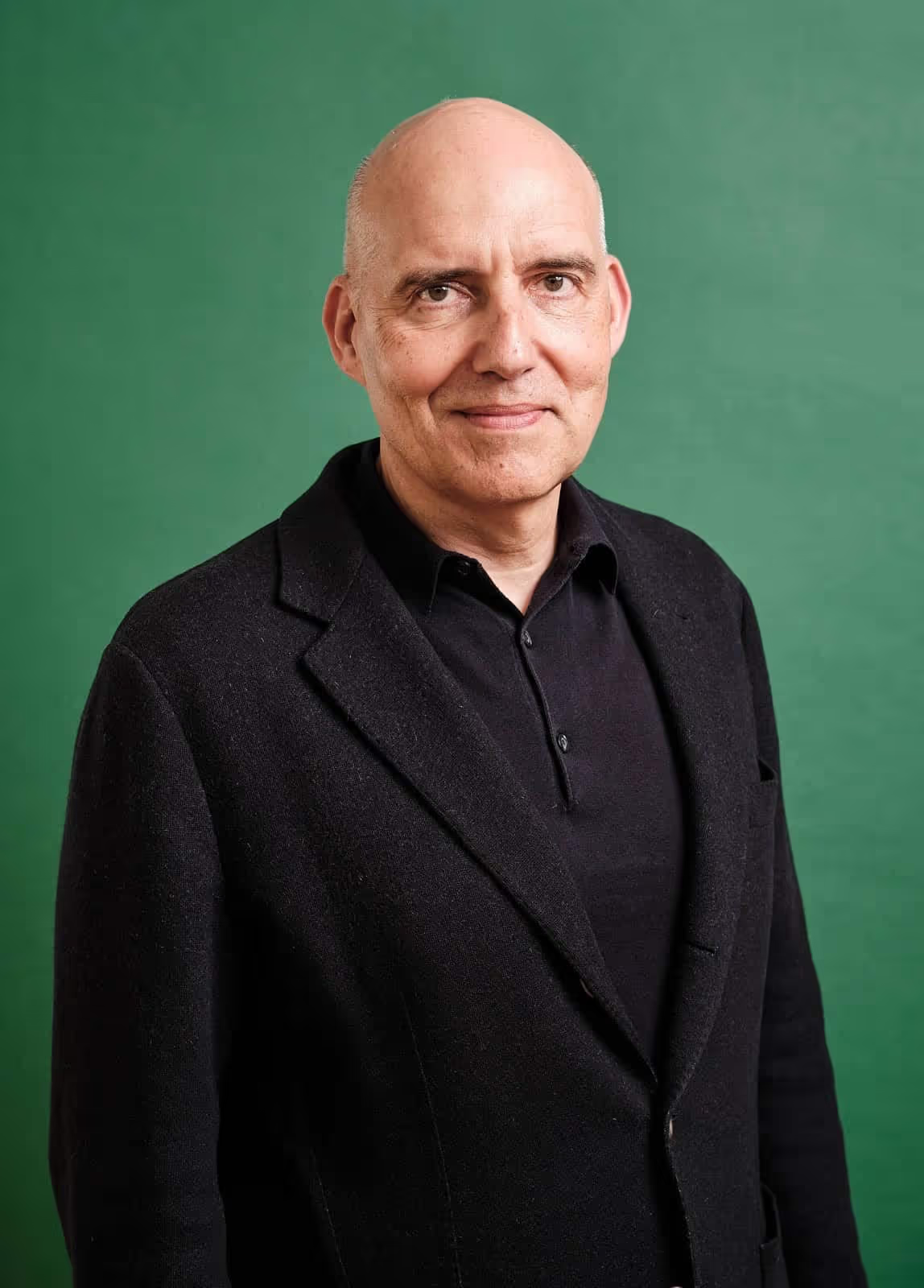
Prof. Dr. mult. Eckhard Nagel is Managing Director of the Institute of Medical Management and Health Sciences at the University of Bayreuth. At the Circle of Experts, he examines the ethical aspects of medical cannabis therapy and advocates for real-world studies.

Prof. Dr. med. Thomas Herdegen
Prof. Dr. med. Thomas Herdegen is a specialist in pharmacology and toxicology and was for many years deputy head of the Institute of Experimental and Clinical Pharmacology at UKSH Kiel. He is co-author of the Cannabis practice guideline and recipient of the German Pain Award 2024.

Dr. med. Dipl.-Chem. Konrad F. Cimander
Dr. med. Dipl.-Chem. Konrad F. Cimander is a specialist in general and addiction medicine, heads the K.C.M. Hannover Competence Center for cannabis medicine and is President of the German Medical Cannabis Society (DMCG). He is a lecturer on addiction medicine, psychopharmacology and cannabis medicine.


Dr. med. Matthias Giesel
Dr. Matthias Giesel is a specialist in anesthesiology and heads the pain clinic at Marienkrankenhaus Soest as well as the practice for pain therapy and palliative medicine at the Hospitalverbund MVZ Soest. He works as a consultant to the pharmaceutical industry on medicinal cannabis.
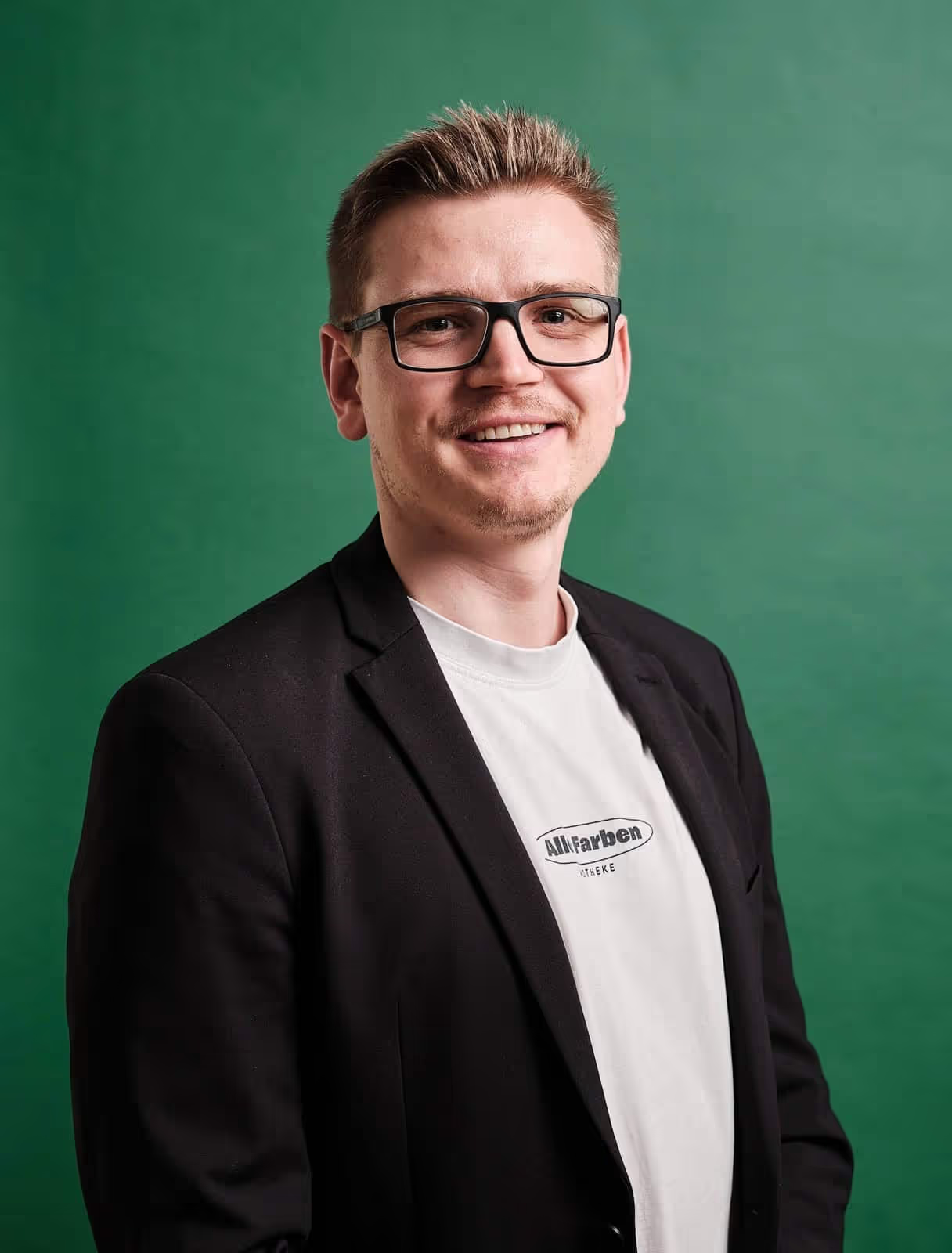
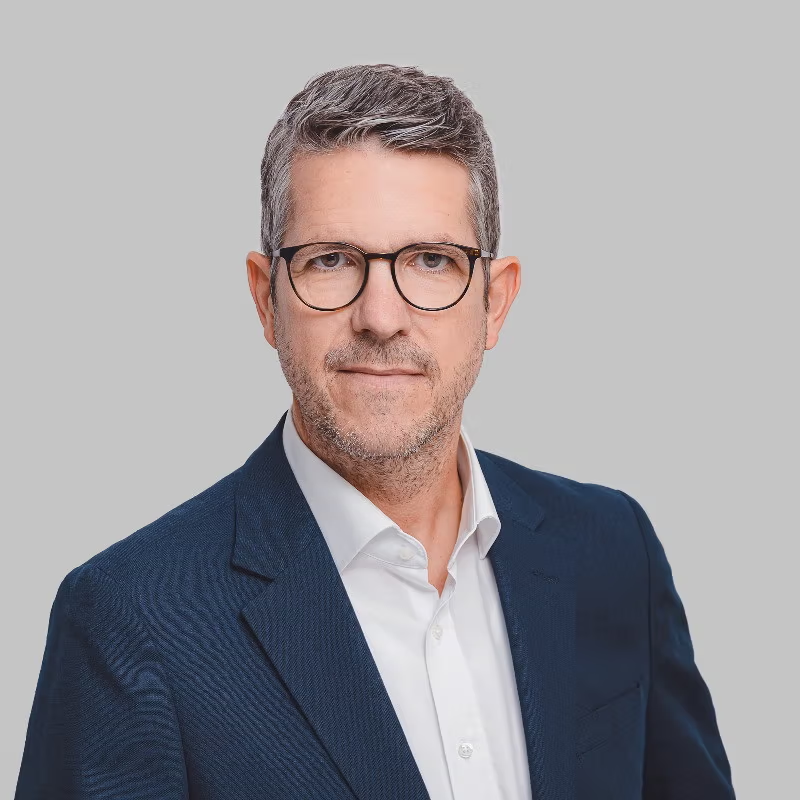
Sascha Saßen
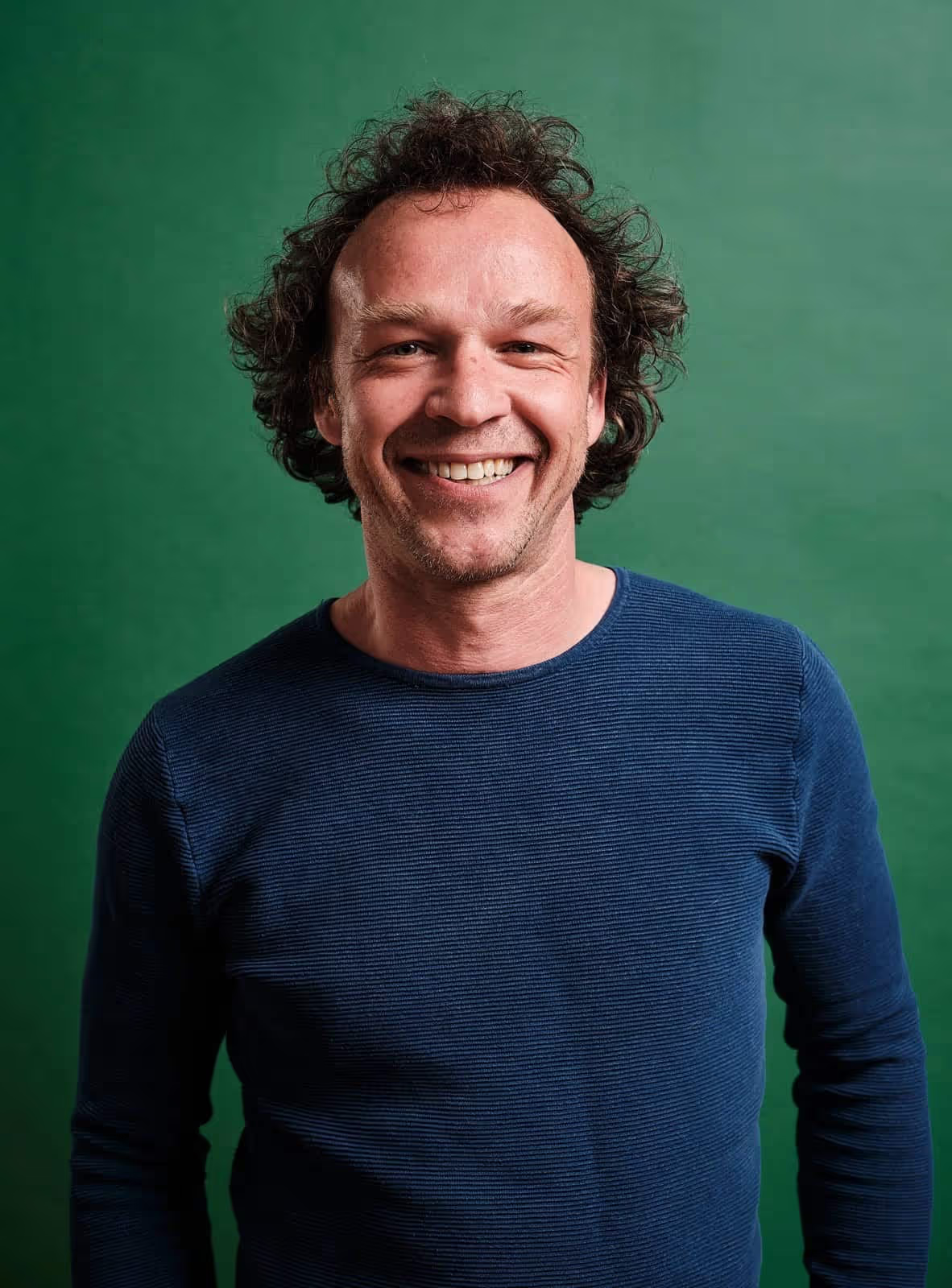
Sascha Saßen holds a degree in nursing management (Diplom-Pflegewirt), is a certified pain expert (CEKIP) and has been CEO of the hesena Group since April 2025. At the Circle of Experts he spoke on pain management in inpatient long-term care and on the medication process in nursing and palliative care.
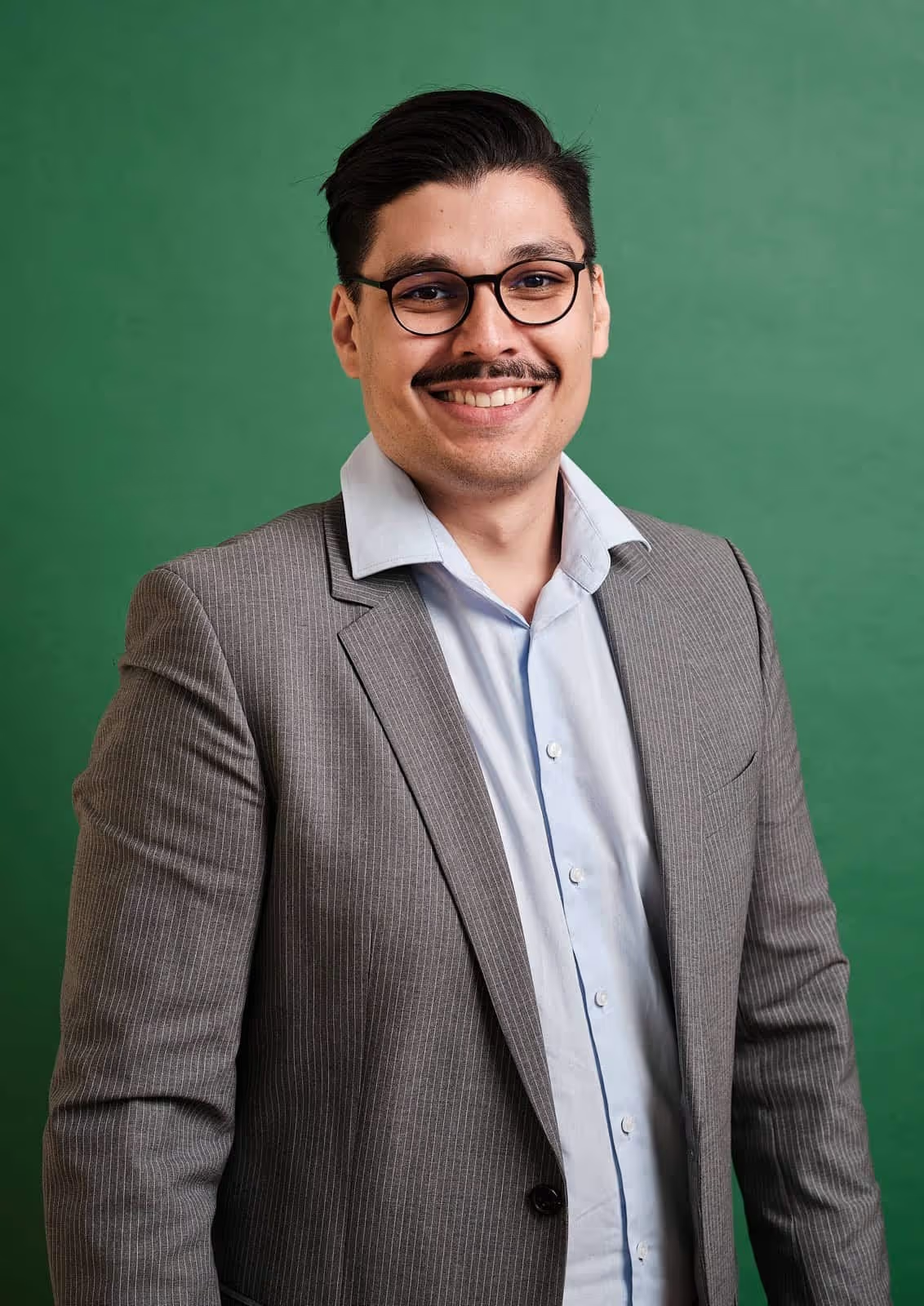
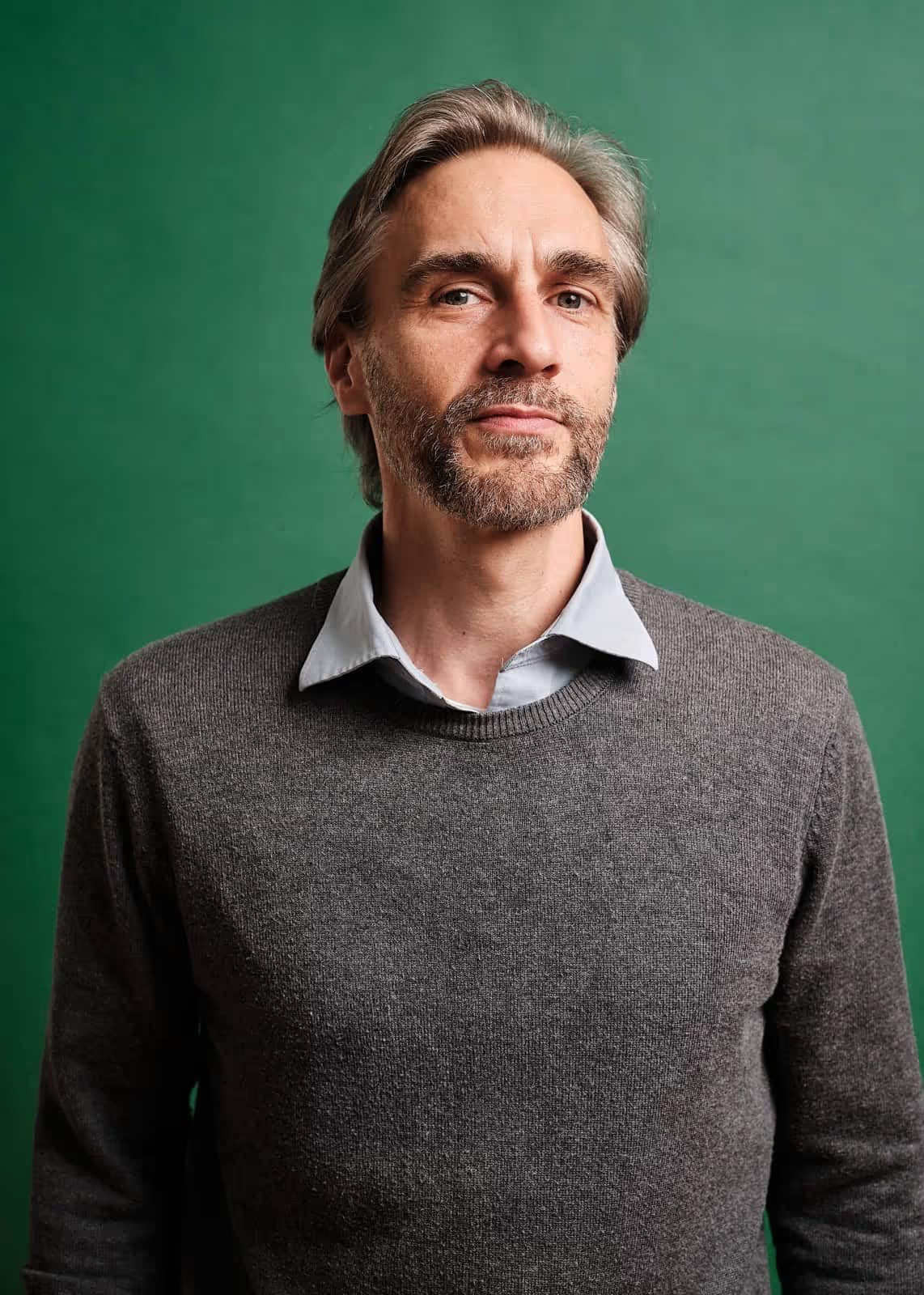
André Ihlenfeld
Dr. André Ihlenfeld is a specialist in anesthesiology and a pain physician, as well as Medical Director at Copeia, where he is responsible for projects on patient-reported data collection under cannabis therapy (including the Physicians Experience Platform). He is co-author of publications on cannabis-based medicines.
Weitere Informationen
- [00:00] — Which cannabis preparations are currently available on the market.
- [00:28] — Bioavailability: inhaled 10–35%, orally only 10–20% for THC.
- [01:00] — More than 200 terpenes documented as pharmacological accompanying substances; discussion of their boiling points and vaporizer temperatures.
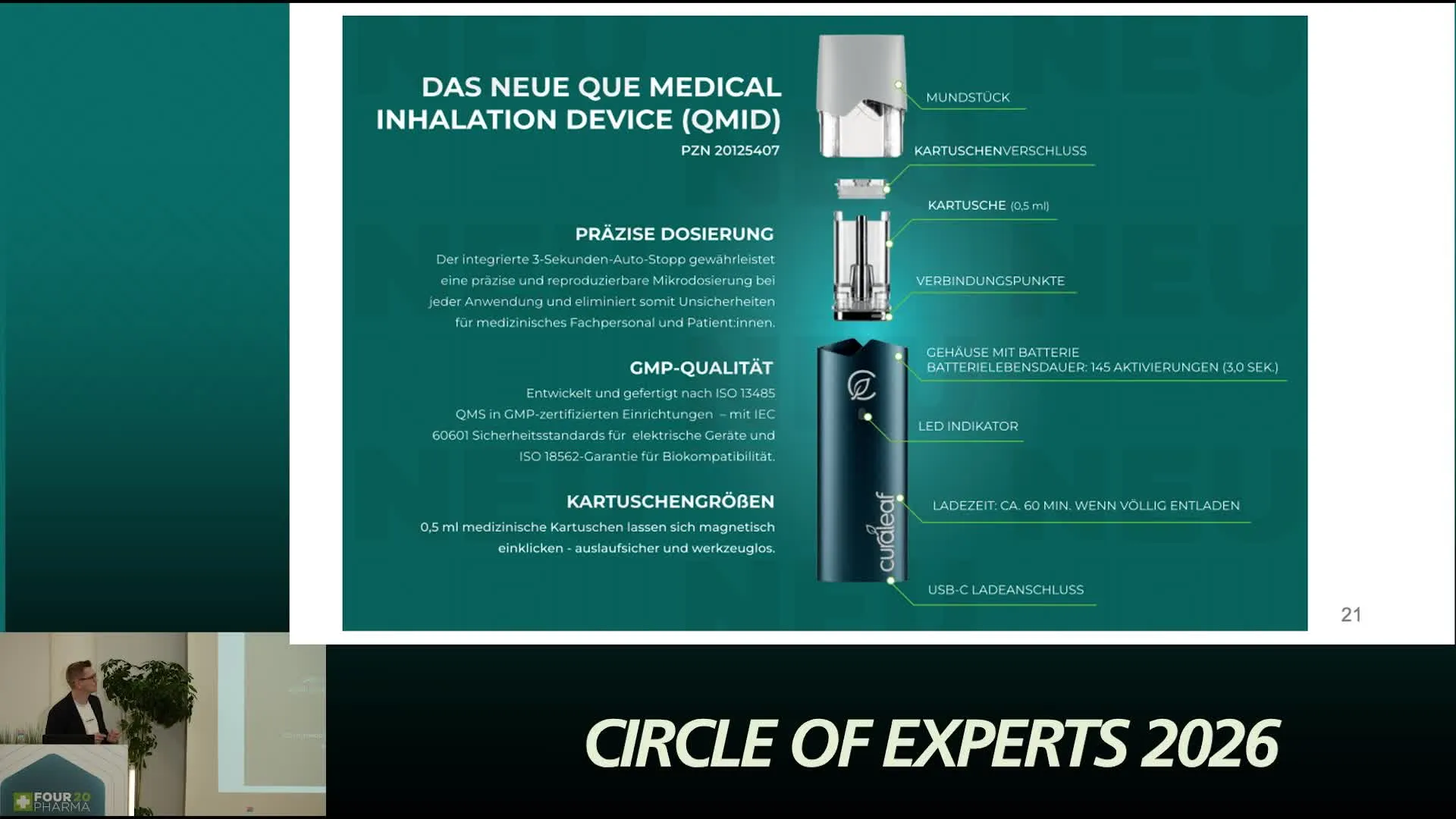
- [01:40] — Qmed as a medical device for reproducible inhalation administration.
- [02:31] — Hilfstaxe incomplete — retax risk with inhalable extract.
Welche Cannabis-Zubereitungen gibt es aktuell im Markt und welche stehen zur Verfügung? Es gibt einige Fertigarzneimittel: Canemes, ich weiß nicht, wer das schon einmal in der Apotheke gehabt hatte — ein synthetisches Cannabinoid, Nabilon, in Kapselform. Sativex als Spray-Variante. Epidyolex als CBD-dominantes Fertigarzneimittel. Und natürlich die ganzen Rezepturarzneimittel — Dronabinol, Cannabisblüten und inhalierbare Extrakte.
Zur Bioverfügbarkeit ganz kurz: Inhalativ kommen tatsächlich nur 10 bis 35 Prozent der Dosis an beim THC, der Rest wird hepatisch oder pulmonal eliminiert. Oral sind es noch etwas weniger, 10 bis 20 Prozent. Die maximale Plasmakonzentration von CBD und THC tritt inhalativ nach 15 bis 30 Minuten auf — oral dauert es deutlich länger, zwei bis drei Stunden in der Regel.
Terpene gibt es über 200 verschiedene, die mittlerweile in einer Cannabisblüte nachgewiesen wurden. Jedes Terpen hat eine gewisse Wirkung, eine gewisse Eigenschaft. Ich habe sechs häufig diskutierte hervorgehoben: Myrcen, Limonen, Humulen, Pinen, Linalool und Beta-Caryophyllen. Sie haben alle unterschiedliche Siedepunkte, von daher muss man immer schauen, wie man den Vaporisator einstellt, damit die Terpene wirklich in die Gasphase übergehen und das Material stark genug erwärmt wird.
Als Medical Device haben wir mittlerweile den Qmed im Markt, ein sehr gutes Device, das wirklich dafür sorgt, dass der Patient reproduzierbar verabreicht bekommt. Man erzielt reproduzierbare Ergebnisse dadurch, man weiß, wie die Einnahme ist. Es ist relativ einfach einzunehmen oder anzuwenden — man muss nicht irgendwelche Sachen vorbereiten, sondern kann das Device im ärztlich verordneten Therapieregime zur schnellen Anwendung kommen.
Der Curaleaf-Extrakt kostet aktuell im Markt 2.400 Euro bei 30 ml Inhalt — für 1 ml wären das dementsprechend 80 Euro. Ganz kurz zur Abrechnung: Es gibt aktuell in der Hilfstaxe nur zwei Varianten, wie man taxieren kann — einmal die Blüten und einmal Oralextrakt. Für inhalierbaren Extrakt gibt es keine richtige Preisberechnung. Wir in den Apotheken haben das erstmal nach der inhalierbaren Form für Blüten abzurechnen versucht — hat tatsächlich nicht funktioniert, wir haben sofort einen Retax bekommen. Danach haben wir es für orale Extrakte gemacht, bis jetzt ist es so durchgegangen, aber man weiß ja, dass die Krankenkasse da nicht schläft. Anhand dieser Variante sind es 80 Euro pro Milliliter, 4,85 Euro Apothekenzuschlag bis zu 80 Euro. Als Beispiel: 80 € plus 4,85 € Zuschlag pro Milliliter, dazu die Kartuschen und zwei Mundstücke — eine Kartusche umfasst jeweils 0,5 ml — sind 6,80 Euro Einkaufspreis, plus Mehrwertsteuer ergibt einen Gesamtbetrag von 109,06 Euro, den man abrechnen kann.