In Kürze
Worum geht es in dem Podcast?
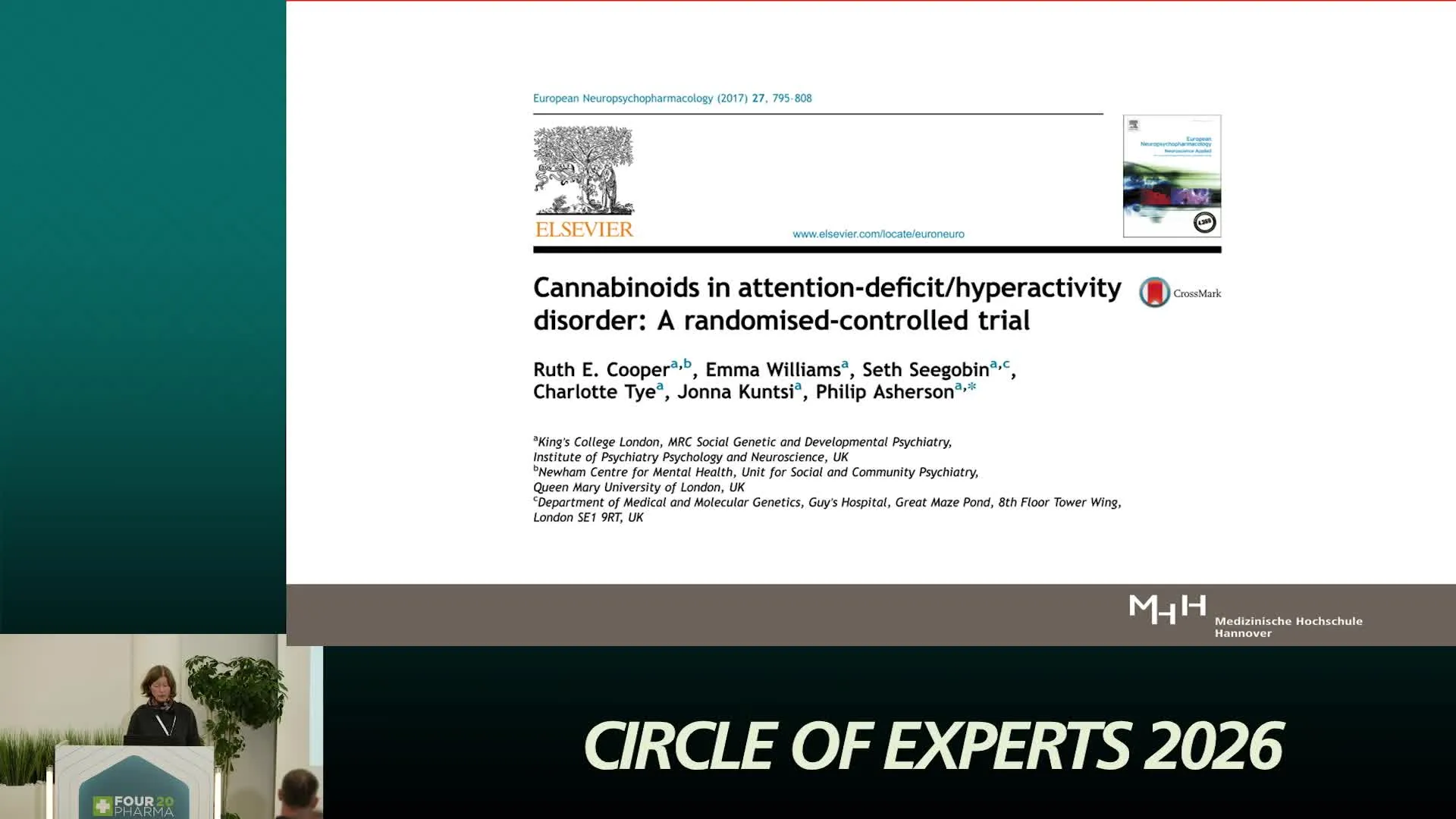
Prof. Dr. med. Kirsten Müller-Vahl, senior physician at the Department of Psychiatry, Social Psychiatry and Psychotherapy of Hannover Medical School (MHH) and a specialist in neurology and psychiatry, classifies the current evidence on the use of cannabinoids in attention-deficit/hyperactivity disorder (ADHD) in this trailer. As a long-standing cannabinoid researcher — known above all for her pioneering work on Tourette syndrome and THC — she positions ADHD as an indication area with high patient demand but a thin evidence base. Self-treatment with cannabis is common in this patient group, whereas controlled randomized evidence is rare.
In the trailer, Müller-Vahl outlines the most important available data sources: a Finnish case report with a five-year course of therapy, a three-case series with an additional effect on depressive and anxiety symptoms as typical comorbidities, the German case series by Franjo Grotenhermen and Eva Milz with 30 patients, and the GW-funded nabiximols study conducted in England. This controlled study missed its primary endpoint but, in secondary endpoints, showed improvements in hyperactivity, impulsivity, inhibitory control and inattention — a methodologically imperfect but clinically relevant signal.
A second core topic is safety in younger adults and adolescents. Müller-Vahl refers to a review that examined long-term changes in neuropsychological tests in adolescent ADHD patients under cannabis — without robust evidence of lasting harm. The talk thus specifically addresses a widespread myth and advocates a factual, unprejudiced assessment of the evidence. In the full contribution at the Circle of Experts 2026, the speaker goes deeper into dosing, the mechanism of action via the endocannabinoid system and differential-therapeutic considerations for practice.
Drei Formate an einem Tag - der Circle of Experts
Fachvorträge
Klinische Praxis aus Schmerz- und Palliativmedizin, Neurologie, Pharmakologie, Pflege und Apotheke. Kurze Slots, hoher Praxisbezug, Q&A direkt im Anschluss.

Fachdiskussionen
Moderierter Austausch zwischen Klinik, Praxis, Apotheke und Pflege. Themen werden vorab gesammelt und gemeinsam priorisiert.

Netzwerken
Klinik, Praxis, Apotheke und Pflege kommen in kleinen Tischrunden gezielt miteinander ins Gespräch, vertiefen Kontakte aus dem Tagesprogramm und knüpfen neue Verbindungen.
Die Fachexpert:innen
Klinik, Forschung, Apotheke und Pflege — die Sprecher:innen kommen aus den Bereichen, in denen Medizinalcannabis täglich angewendet wird.

Prof. Dr. mult. Eckhard Nagel
Prof. Dr. mult. Eckhard Nagel is Managing Director of the Institute of Medical Management and Health Sciences at the University of Bayreuth. At the Circle of Experts, he examines the ethical aspects of medical cannabis therapy and advocates for real-world studies.

Prof. Dr. med. Thomas Herdegen
Prof. Dr. med. Thomas Herdegen is a specialist in pharmacology and toxicology and was for many years deputy head of the Institute of Experimental and Clinical Pharmacology at UKSH Kiel. He is co-author of the Cannabis practice guideline and recipient of the German Pain Award 2024.

Dr. med. Dipl.-Chem. Konrad F. Cimander
Dr. med. Dipl.-Chem. Konrad F. Cimander is a specialist in general and addiction medicine, heads the K.C.M. Hannover Competence Center for cannabis medicine and is President of the German Medical Cannabis Society (DMCG). He is a lecturer on addiction medicine, psychopharmacology and cannabis medicine.


Dr. med. Matthias Giesel
Dr. Matthias Giesel is a specialist in anesthesiology and heads the pain clinic at Marienkrankenhaus Soest as well as the practice for pain therapy and palliative medicine at the Hospitalverbund MVZ Soest. He works as a consultant to the pharmaceutical industry on medicinal cannabis.

Sascha Saßen
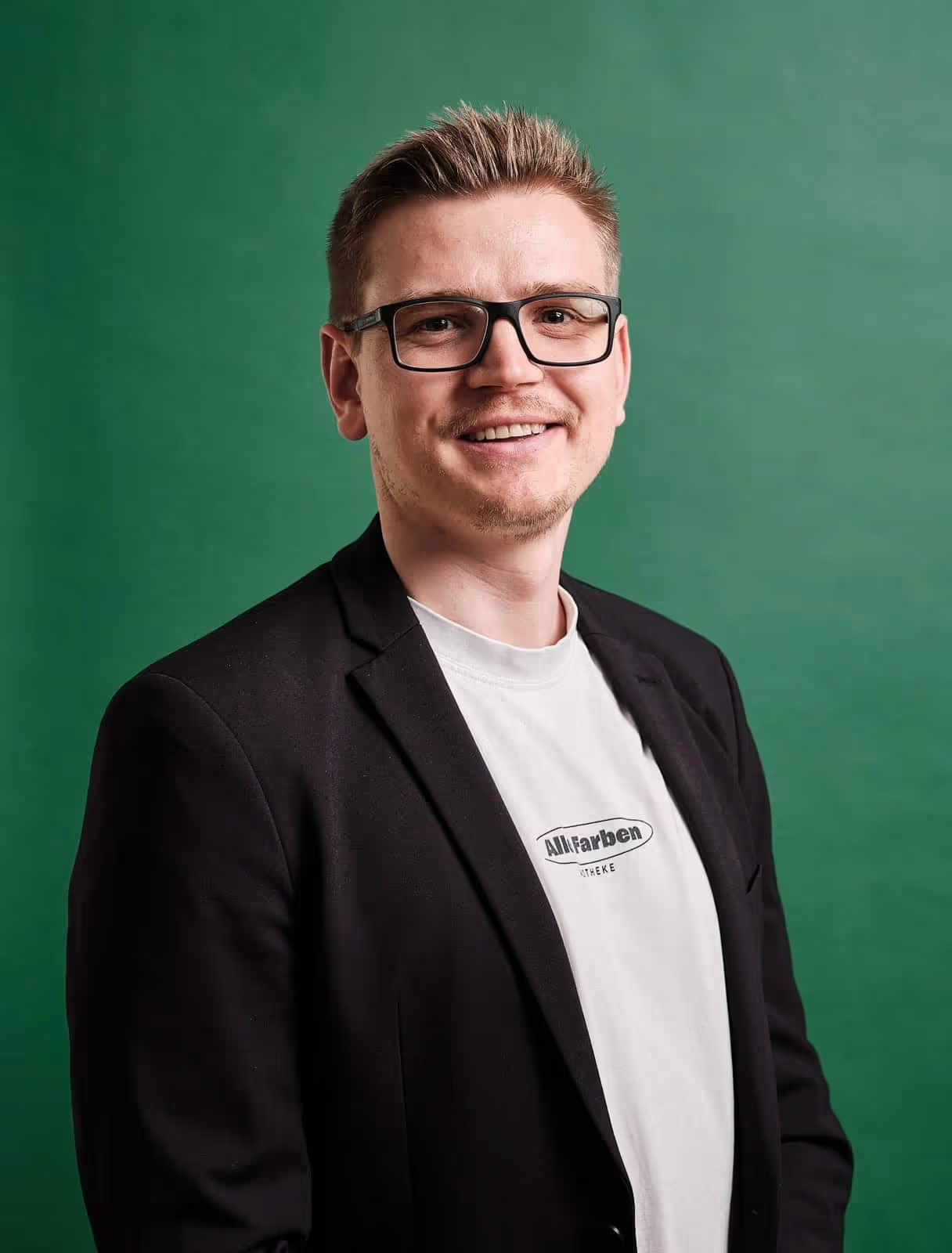
Sascha Saßen holds a degree in nursing management (Diplom-Pflegewirt), is a certified pain expert (CEKIP) and has been CEO of the hesena Group since April 2025. At the Circle of Experts he spoke on pain management in inpatient long-term care and on the medication process in nursing and palliative care.


André Ihlenfeld
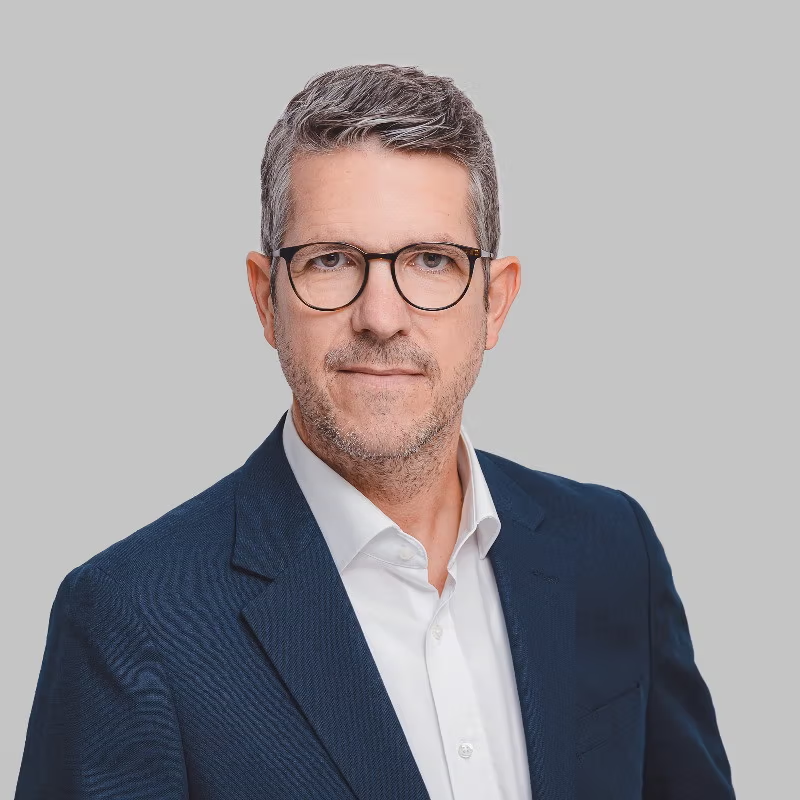
Dr. André Ihlenfeld is a specialist in anesthesiology and a pain physician, as well as Medical Director at Copeia, where he is responsible for projects on patient-reported data collection under cannabis therapy (including the Physicians Experience Platform). He is co-author of publications on cannabis-based medicines.
Weitere Informationen
- [00:10] — Classification of a Finnish case report on long-term cannabinoid therapy in ADHD.
- [00:33] — A majority of ADHD patients describe cannabis as therapeutically useful in self-reports.
- [01:15] — Discussion of the Grotenhermen/Milz case series (n=30) and its methodological limits.
- [01:46] — Nabiximols study England: primary endpoint missed, secondary endpoints predominantly positive.
- [02:42] — Overview of the current evidence base of neuropsychological safety data.
- [03:15] — Discussion of the role of THC in the ADHD evidence debate.
Im Bereich ADHS kann man heutzutage immer noch einzelne Fallberichte publizieren. Das kann man immer dann, wenn es wenig Daten gibt, weil sonst wird das in keinem Journal mehr angenommen. Hier ein Fallbericht aus Finnland, wo immerhin eine Therapiedauer von fünf Jahren beschrieben wird, in der stabil mit einer konstanten Dosis ein positiver Effekt für verschiedene ADHS-Symptome erzielt werden konnte. Wenn man das nun etwas genauer anguckt und Patienten befragt: Wenn du ADHS hast, nimmst du Cannabis und wie schätzt du selber das ein? Dann sagt die Mehrzahl der Personen: Ja, das hat für mich therapeutisch Nutzen. Aber es gibt auch Personen, die natürlich sagen, für mich hat es auch Probleme. Es scheint also eine gewisse Überlappung hier im Bereich ADHS zu geben.
Dann haben wir eine weitere Studie, die drei Fallberichte zusammenfasst, und hier wird berichtet, dass sich nicht nur in der Studie eine Veränderung der ADHS-Symptomatik beschrieben wird, sondern auch andere Symptome wie zum Beispiel depressive Symptome oder Angstsymptome – häufige weitere Komorbiditäten, wie wir sie bei diesen Patienten sehen. Dann gibt es eine Fallserie, die nur in Abstract-Form veröffentlicht wurde, schon relativ lang her, von Franjo Grotenhermen und Eva Milz. Die beschreiben eine Gruppe von 30 Patienten und berichten, dass es zu einer umfänglichen Symptomverbesserung kam und insbesondere zur Einsparung typischer anderer ADHS-Medikamente. Und Sie sehen schon: N gleich 30, das ist jetzt nicht wirklich berühmt.
Was haben die Kollegen gemacht? Das ist eine kontrollierte Studie, die in England durchgeführt wurde. Finanziert wurde sie von GW, der Firma, die Nabiximols herstellt, ist aber eine unabhängige Studie gewesen. Formal ist das eine negative Studie, weil sie ihren primären Endpunkt nicht erreicht hat. Und auch das ist eine Studie, die, wenn Sie die Literatur durchgucken, mal positiv und mal negativ bewertet wird. Man kann entweder formal sagen, der primäre Endpunkt wurde nicht erreicht, pups, dann ist man eben formal eine negative Studie. Aber es gab natürlich wie in jeder Studie zahlreiche sekundäre Endpunkte, und die wurden tatsächlich überwiegend erreicht, indem nämlich gezeigt werden konnte, dass Einzelsymptome – Hyperaktivität, Impulsivität, Inhibitionskontrolle, Unaufmerksamkeit – sich dann doch verbesserten. Und wenn man da hinguckt, dann kann man auch sagen: Naja, formal negativ, aber sie hat durchaus positive Aspekte.
Was wäre noch wichtig, wenn wir uns jetzt tatsächlich trauen, Menschen mit ADHS mit Cannabinoiden zu behandeln? Tun wir gerade bei jüngeren Erwachsenen und Jugendlichen etwas Schlechtes? Hier gibt es eine Übersichtsarbeit, die mal geguckt hat, ob es langfristig Veränderungen in neuropsychologischen Tests gibt, wenn Jugendliche mit ADHS Cannabis einnehmen – und die Antwort ist nein. Hierfür gibt es keine robuste Datenlage. Es gibt ja viele Mythen, die zu Cannabis im Raum sind. Und auch das ist sicherlich ein Mythos, dass man automatisch immer sagt: Wer das macht, der tut seinem Gehirn langfristig etwas Schlechtes. Aber die Daten geben das tatsächlich so nicht her, wenn man da mal wirklich vorurteilsfrei und sachlich drauf guckt.
Damit komme ich zu meiner Zusammenfassung: Ja, viele Menschen mit ADHS nehmen Cannabis als Selbsttherapie ein. Die Studienlage ist aber sehr, sehr dünn. Ich denke, wenn wir von positiven Effekten sprechen, dann kommt es sicher vom THC.