
In Kürze
Worum geht es in dem Podcast?
Sascha Saßen, CEO of the hesena Group and Managing Director of the Sascha Saßen Care Consultancy, brings the nursing perspective on pain therapy and the use of medical cannabis into his trailer for the Circle of Experts 2026. While medical talks foreground guidelines, studies and recourse risks, Saßen shifts the focus to what actually happens in inpatient and outpatient elderly care as well as in disability support services: a 24/7 view of patients that understands the pain situation as a continuous profile and not as a one-off measurement.
His core thesis: the external regulation by medical review services often does not examine what is anchored in expert standards — and the social desirability of classic pain scales distorts the patient's answer. Saßen therefore argues for recording pain not primarily by intensity but by treatment relevance, and presents the biopsychosocial nursing model as a framework that has been tried and tested for 26 years. For the roughly 90 percent of cognitively impaired residents of inpatient facilities, who are neither eligible for studies nor reachable through standard measurement instruments, he calls for external-assessment systems such as the BESD scale and the PAINAD score as a binding part of nursing standards.
From this, Saßen derives a clear promise to medical and therapeutic partners: nursing professionals observe the effects and side effects of medical cannabis in a structured way, evaluate treatment goals along qualitative quality-of-life criteria — mobility, self-care, social participation — and define the therapy goal together with the patient. With the quote from his oncology patients — that freedom from pain is not the goal, but a balanced leveling between resilience and the ability to converse — he marks the standard that the 2026 congress sets for interprofessional cannabis therapy.
Drei Formate an einem Tag - der Circle of Experts
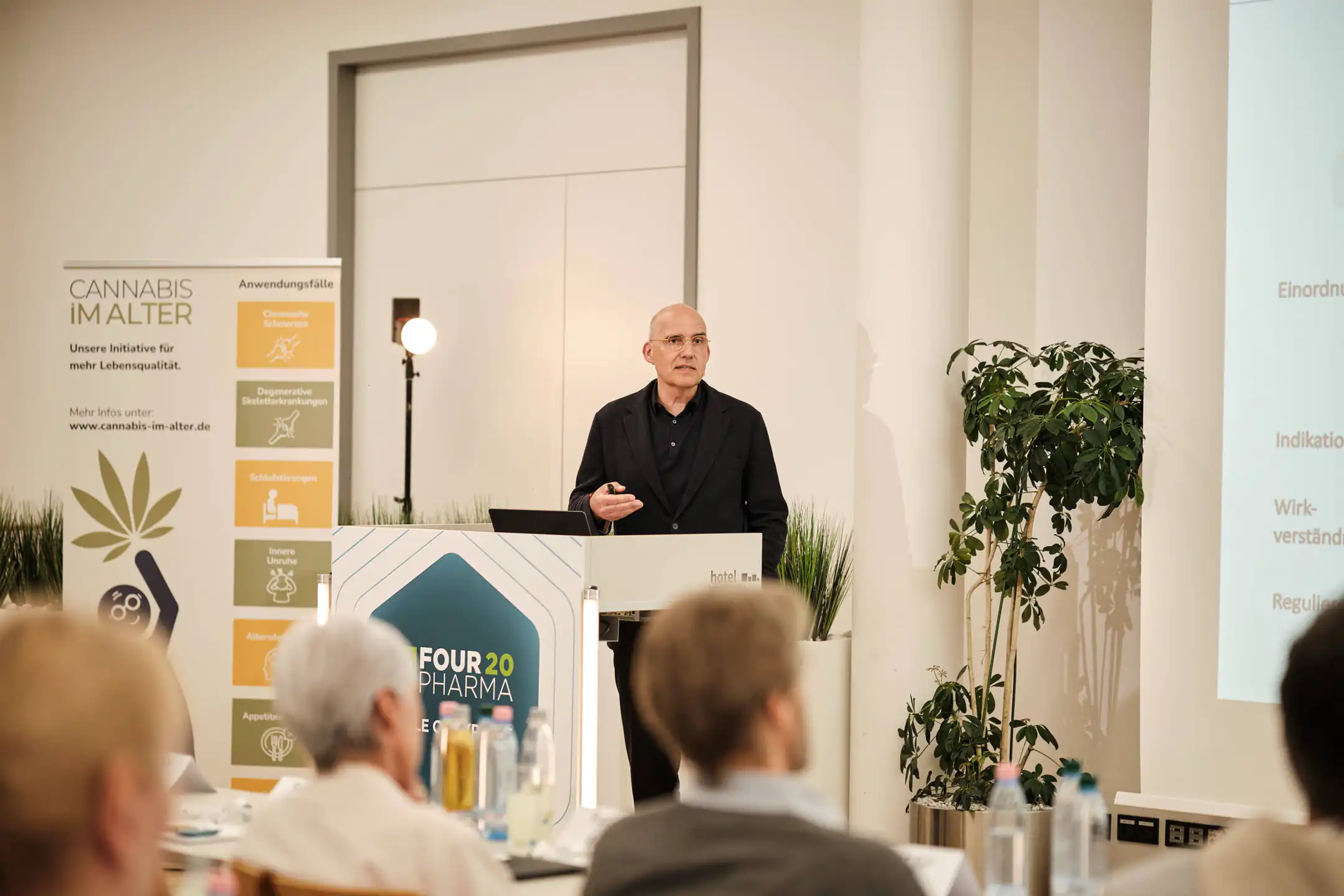
Fachvorträge
Klinische Praxis aus Schmerz- und Palliativmedizin, Neurologie, Pharmakologie, Pflege und Apotheke. Kurze Slots, hoher Praxisbezug, Q&A direkt im Anschluss.

Fachdiskussionen
Moderierter Austausch zwischen Klinik, Praxis, Apotheke und Pflege. Themen werden vorab gesammelt und gemeinsam priorisiert.

Netzwerken
Klinik, Praxis, Apotheke und Pflege kommen in kleinen Tischrunden gezielt miteinander ins Gespräch, vertiefen Kontakte aus dem Tagesprogramm und knüpfen neue Verbindungen.
Die Fachexpert:innen
Klinik, Forschung, Apotheke und Pflege — die Sprecher:innen kommen aus den Bereichen, in denen Medizinalcannabis täglich angewendet wird.
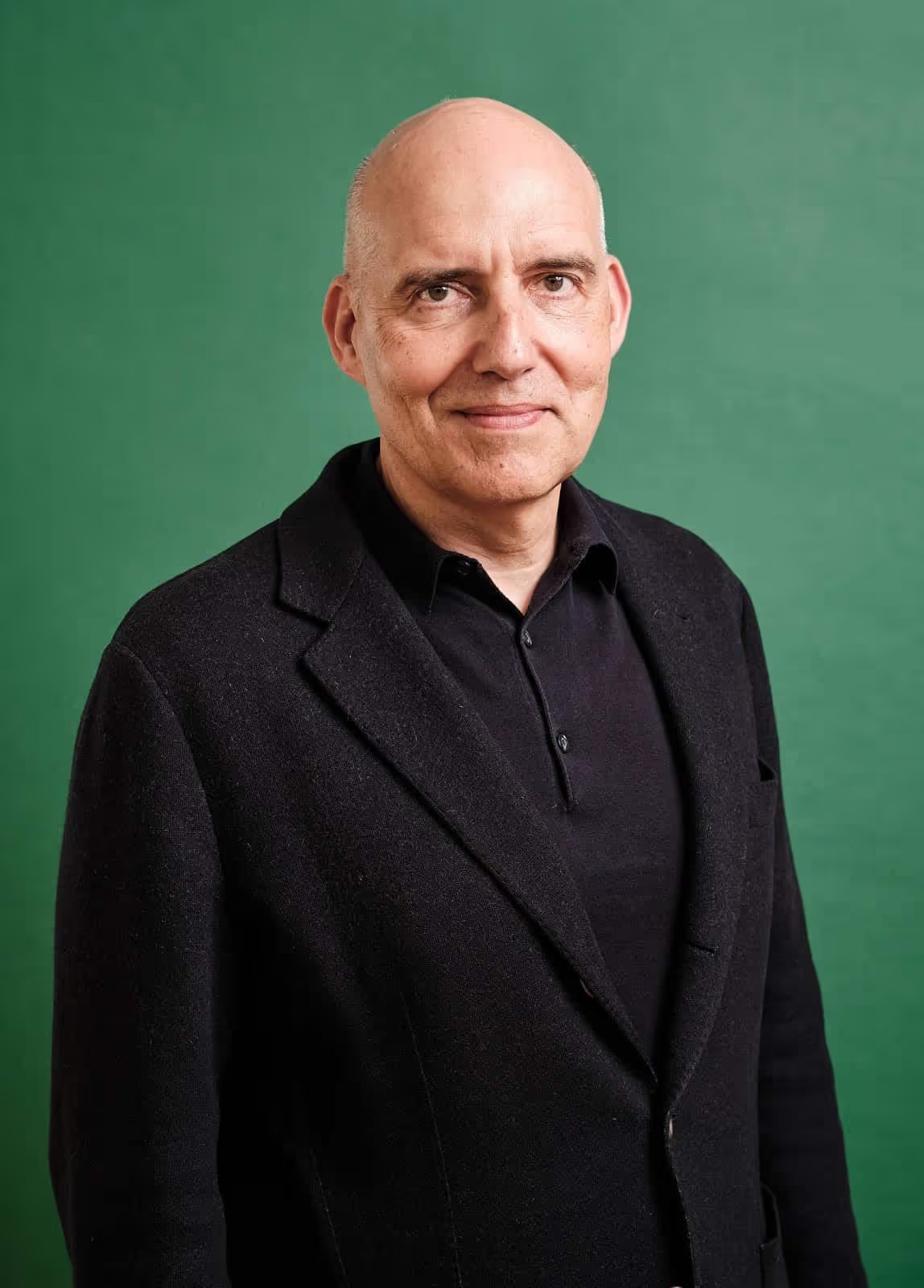
Prof. Dr. mult. Eckhard Nagel
Prof. Dr. mult. Eckhard Nagel is Managing Director of the Institute of Medical Management and Health Sciences at the University of Bayreuth. At the Circle of Experts, he examines the ethical aspects of medical cannabis therapy and advocates for real-world studies.

Prof. Dr. med. Thomas Herdegen
Prof. Dr. med. Thomas Herdegen is a specialist in pharmacology and toxicology and was for many years deputy head of the Institute of Experimental and Clinical Pharmacology at UKSH Kiel. He is co-author of the Cannabis practice guideline and recipient of the German Pain Award 2024.

Dr. med. Dipl.-Chem. Konrad F. Cimander
Dr. med. Dipl.-Chem. Konrad F. Cimander is a specialist in general and addiction medicine, heads the K.C.M. Hannover Competence Center for cannabis medicine and is President of the German Medical Cannabis Society (DMCG). He is a lecturer on addiction medicine, psychopharmacology and cannabis medicine.


Dr. med. Matthias Giesel
Dr. Matthias Giesel is a specialist in anesthesiology and heads the pain clinic at Marienkrankenhaus Soest as well as the practice for pain therapy and palliative medicine at the Hospitalverbund MVZ Soest. He works as a consultant to the pharmaceutical industry on medicinal cannabis.
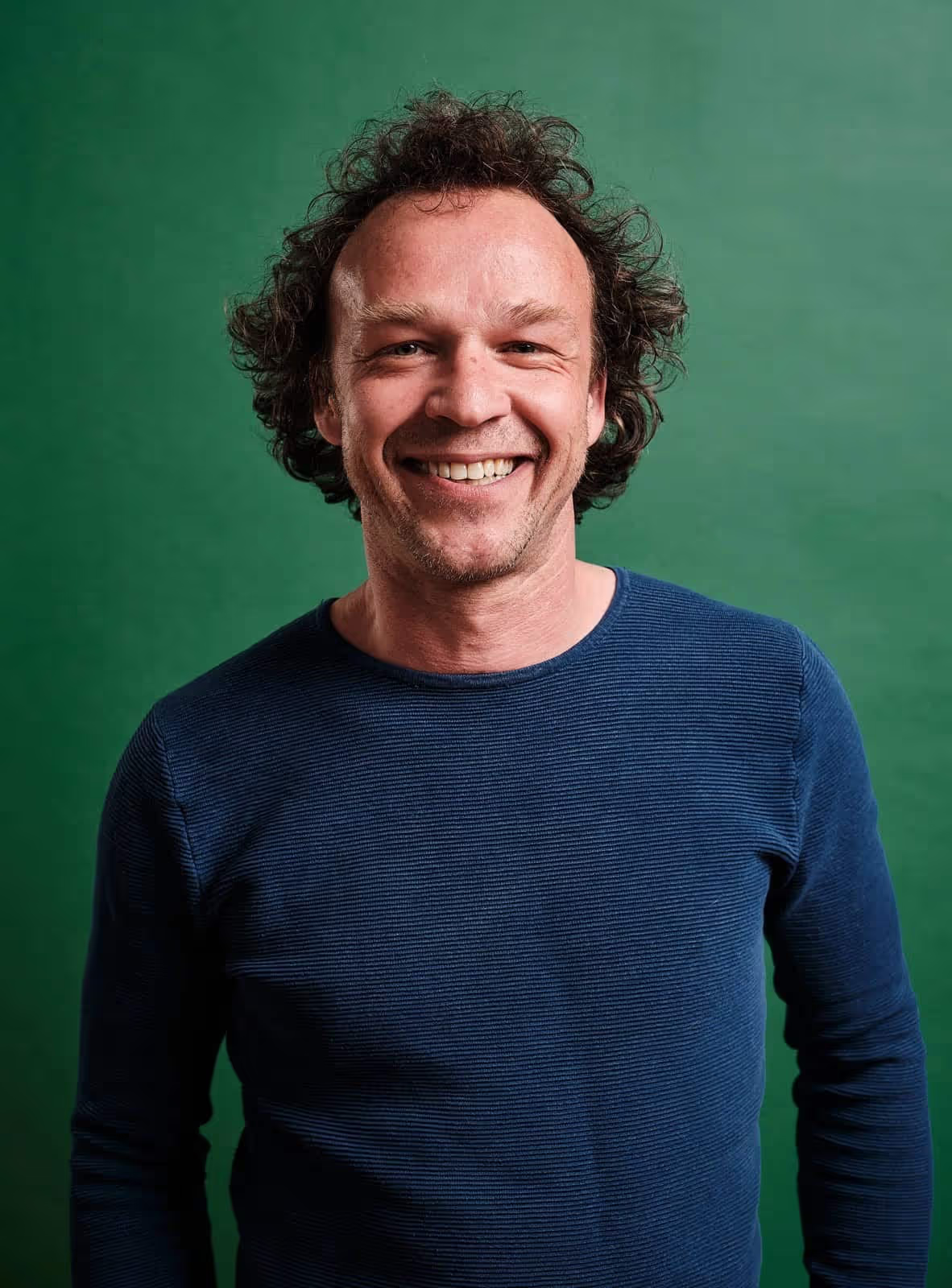
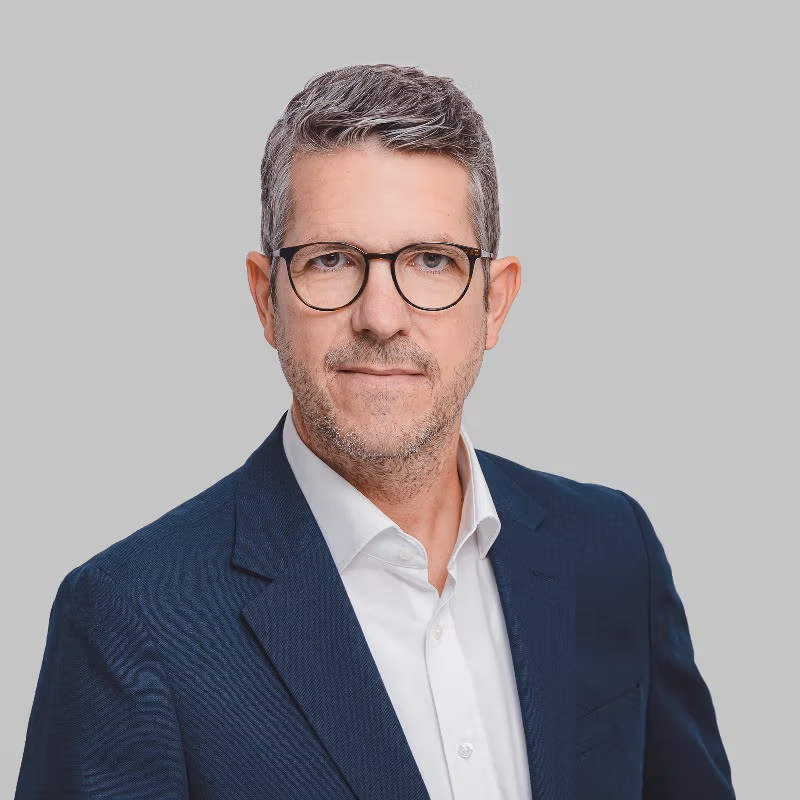
Sascha Saßen
Sascha Saßen holds a degree in nursing management (Diplom-Pflegewirt), is a certified pain expert (CEKIP) and has been CEO of the hesena Group since April 2025. At the Circle of Experts he spoke on pain management in inpatient long-term care and on the medication process in nursing and palliative care.
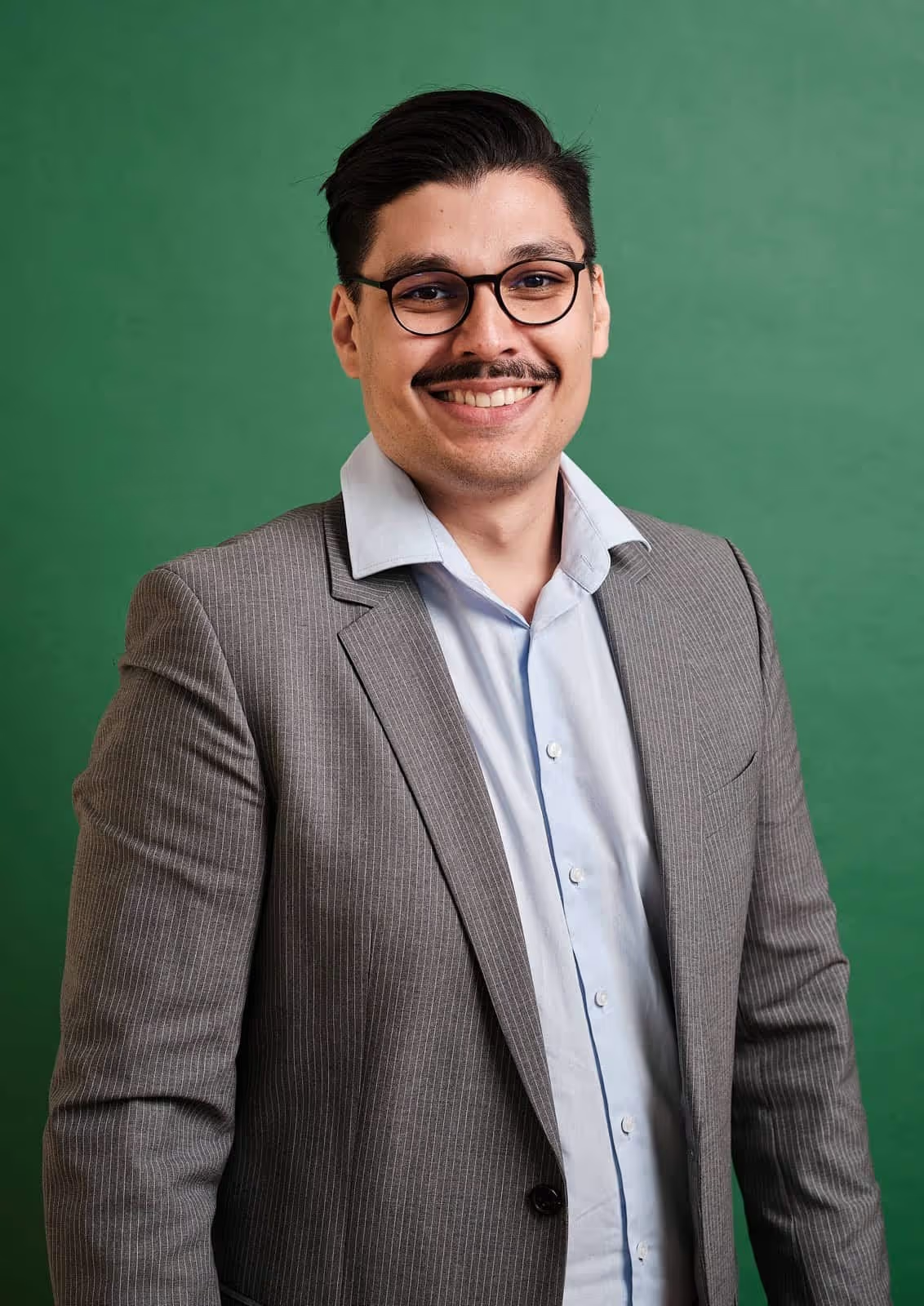
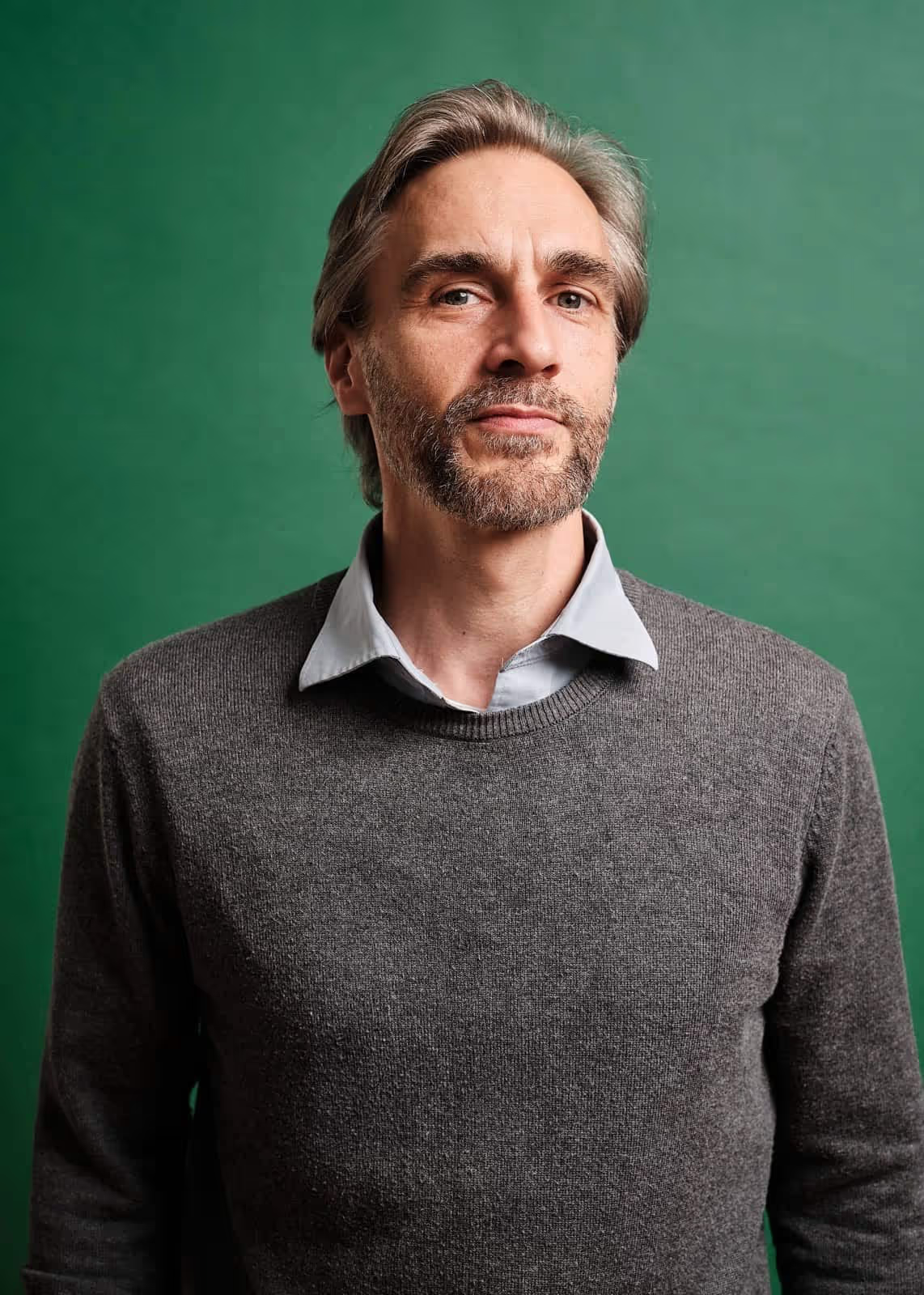
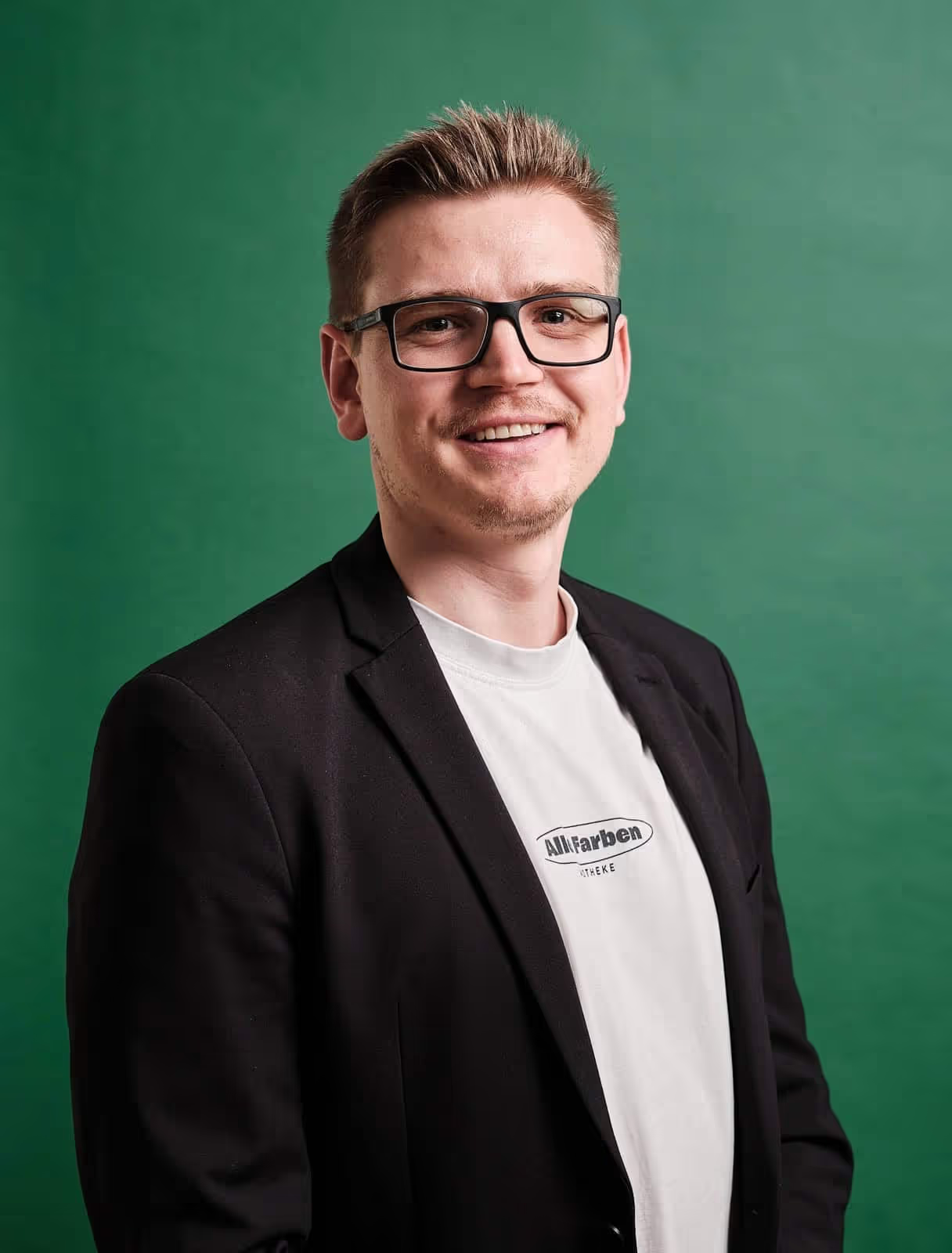
André Ihlenfeld
Dr. André Ihlenfeld is a specialist in anesthesiology and a pain physician, as well as Medical Director at Copeia, where he is responsible for projects on patient-reported data collection under cannabis therapy (including the Physicians Experience Platform). He is co-author of publications on cannabis-based medicines.
Weitere Informationen
- [00:00] — Nursing looks at patients 24/7, with a different duration and respect
- [00:35] — The external regulation of the medical review services has little to do with guidelines
- [01:46] — The biopsychosocial nursing model has been established in nursing science for 26 years
- [02:49] — For the cognitively impaired, the BESD scale and PAINAD score instead of self-assessment
- [04:07] — Oncology patients: a balanced leveling rather than freedom from pain is the real art
Jetzt wird es pflegefachlich, so ein bisschen zumindest. Ich habe sehr viele Parallelitäten heute Morgen bei den stark wissenschaftlich und ärztlich dominierten Bereichen gesehen. Wir sind an einem ganz anderen Punkt in der Pflege angesiedelt, in einer stationären und ambulanten Altenhilfe, aber auch in der Eingliederungshilfe, und schauen 24/7 mit einer gewissen anderen Dauer und dem notwendigen Respekt auf die Patienten. Ich höre immer gerne aus dem Mund der Ärzte, wie verpflichtend sie Leitlinien anwenden wollen und welche Angst vor Regressen sie haben. Das ist alles richtig, aber ich erlebe doch etwas anderes, denn das leitlinienlose Rumgewurschtel mancher Kollegen und auch bei uns in der Pflege ist sehr stark etabliert. Hinzu kommt, dass die externe Regulation, das heißt das, was medizinische Dienste überprüfen, oftmals mitnichten etwas mit den Leitlinien zu tun hat.
Patienten sind nicht doof. Sie merken, wenn es eine Leitlinie oder einen Standard gibt, dass auf der Station Medikamente nur bei Bedarf verabreicht werden. Wenn ich 4 von 10 im Schmerzniveau angebe und bei 3 von 10 die Nachtschwester wieder weggeht und sagt „naja gut, dann vielleicht beim nächsten Mal — die Schmerzen sind nicht stark genug, weil meine Anordnung so aussieht“, dann führt diese soziale Erwünschtheit dazu, dass der Patient demnächst eine andere Antwort gibt. Das haben wir aus dem Standard wieder rausgenommen. Wir fragen den Patienten nur noch nach einem relevanten Merkmal: Ist der Schmerz, den Sie haben, egal wie stark, behandlungsrelevant oder nicht behandlungsrelevant? Die ordentliche Betrachtung, das biopsychosoziale Pflegemodell, ist etwas, was wir seit 26 Jahren in der Domäne der Pflegewissenschaft vor uns hertragen, beherrschen und auch zum Ausdruck bringen.
Man muss relativ schnell einen Schmerzpatienten erkennen können. In einer aktuellen Diskussion war in einer Pflegeeinrichtung ein Rezept überfällig, das Medikament nicht geliefert. Ich behaupte: Das hat erst einmal wenig mit dem Rezept und den Medikamenten zu tun, sondern die Schmerzsituation des Betroffenen hätte mich dazu veranlassen müssen zu sagen: Hier stimmt etwas nicht — das Medikament ist gar nicht da, weil der Patient mir das Profil tatsächlich anbietet. Jetzt haben wir ein Riesenproblem: Die Studien, wie wir alle gesehen haben, funktionieren nicht bei 90 Prozent des Patientenklientels, das wir in unserer stationären Pflegeeinrichtung haben, nämlich kognitiv eingeschränkten Personen. Zwei Probleme: Erstens ist die Studienteilnahme ein ethischer Konflikt. Zweitens können diese Patienten nicht mit den Messinstrumenten der Medizin untersucht werden, ob Schmerzen vorliegen oder nicht. Wir setzen daher auf Fremdeinschätzungssysteme wie die BESD-Skala — ein Instrument für Schmerzen bei Demenz — oder den PAINAD-Score.
Ein wichtiger Punkt zu den Aspekten, die wir gehört haben, warum Ärzte den Einsatz von Medizinalcannabis unter Umständen ablehnen, weil sie Sorge vor möglichen Nebenwirkungen oder unbeobachteten Wirkungen haben: Antwort Nummer eins von uns als Pflegefachpersonen — das ist Bestandteil unserer Standards. Das darfst du als Therapeut auch von uns erwarten, dass wir das tun. Ich zeige gleich noch ein paar Instrumente, mit denen man das machen kann. Zum Schluss evaluieren wir die Maßnahmen, messen wieder die Schmerzintensität und prüfen, ob die Behandlungsziele, die wir uns gemeinsam festgelegt haben, analog dem biopsychosozialen Pflegemodell — also auch die qualitativen Ziele in Bezug auf die Lebensqualität — eingehalten worden sind: Beweglichkeit, sich selbst anziehen, waschen und kleiden, an sozialen Interaktionen teilnehmen — und eine stabile, akzeptable Schmerzsituation.
Eine Schmerzsituation, die gut kompensiert, aushaltbar, austarierbar ist. Meine Patienten in der Onkologie haben mir stets gesagt: Schmerzfreiheit ist nicht mein Ziel, sondern eine ausgewogene Nivellierung zwischen dem, was ich noch können und schaffen möchte. Ich möchte den Dialog mit meinen Angehörigen führen. Bei absoluter Schmerzfreiheit kann ich das nicht, dann bin ich in Narkose und nicht mehr ich selbst, habe mich nicht unter Kontrolle. Dieses Niveau zu erreichen — das wäre die hohe Kunst.